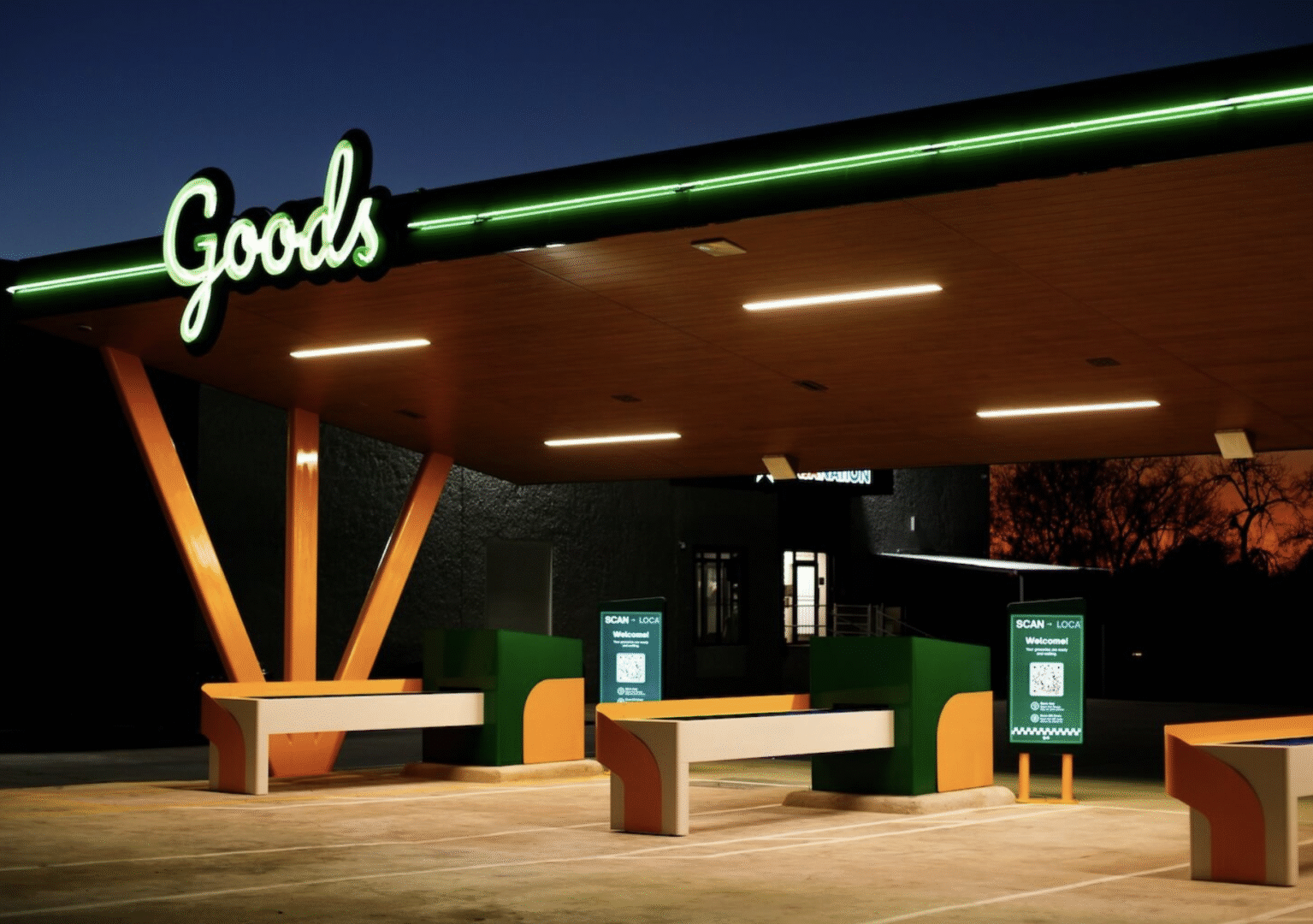
A US start-up is building citywide networks of underground pipes to move goods at over 100 miles an hour – and it thinks this infrastructure could become the backbone of last-mile delivery.
The last mile has long been the costliest, most inefficient part of the retail supply chain. Despite years of investment in drones, autonomous vehicles and smart lockers, moving a parcel from a fulfilment centre to a customer’s hands remains stubbornly expensive and slow. Pipedream, a US start-up founded by Garrett McCurrach, believes the solution lies not above ground – but beneath it.
We spoke to McCurrach about how Pipedream is building citywide networks of underground pipes capable of transporting goods at speeds exceeding 100 miles per hour. The system he and his team are building is, in essence, a high-speed pneumatic rail system for urban commerce – and it is already under construction in Austin, Texas.
Reimagining last mile infrastructure
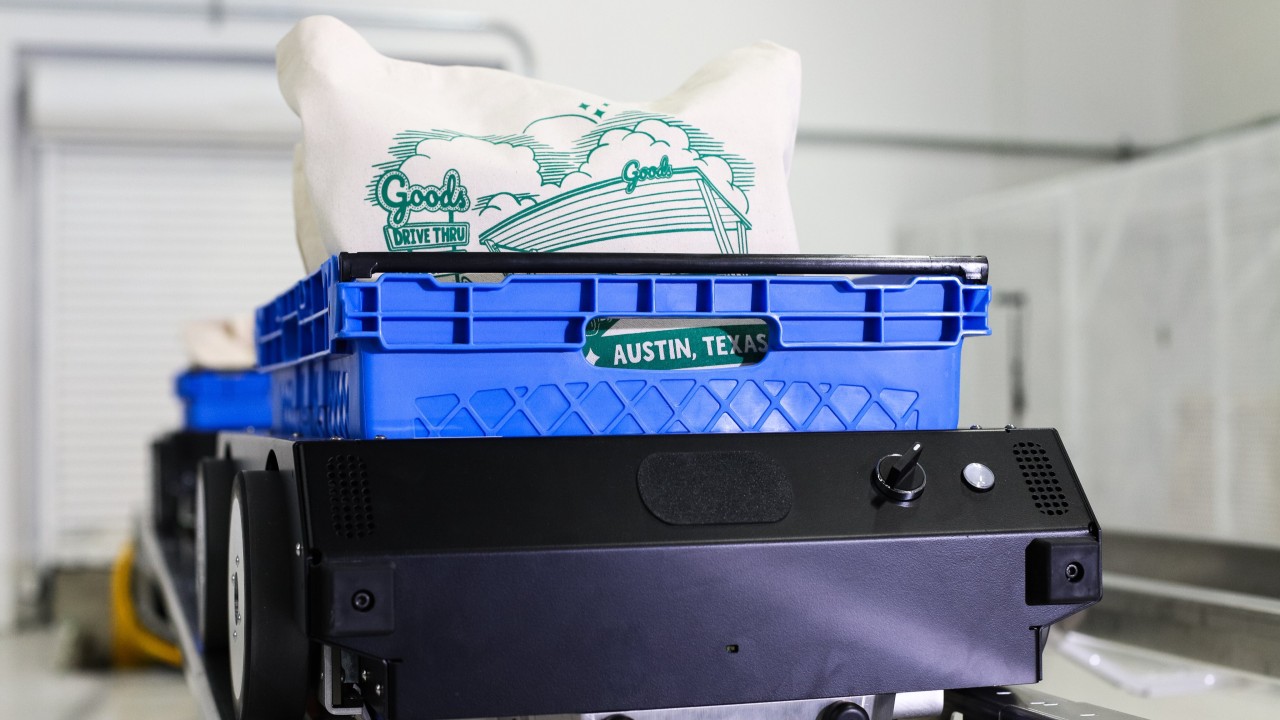
The network McCurrach envisages for Pipedream is a purpose-built underground infrastructure that connects fulfilment centres and retail stores, allowing partners to inject products directly into the pipe system for customers to buy. Items travel inside standard-sized e-commerce tote bags mounted on electric skateboard-style sleds, which are whisked through the underground tubes before surfacing at what the company calls “portals” – ATM-sized kiosks positioned at accessible points across the city.
The mechanical components are designed to be straightforward for ease of adoption; any warehouse automation specialists would find the individual parts familiar. The company’s innovation lies in how the system can be assembled and deployed at scale across an entire city. A “tote grabber” at each portal retrieves the sled and dispenses the order, creating a seamless handoff point for drivers or customers. Pipedream’s goal is to establish 100 portals across Austin, with Dallas earmarked as the second city-wide rollout.
Goods: Rethinking grocery pick-up
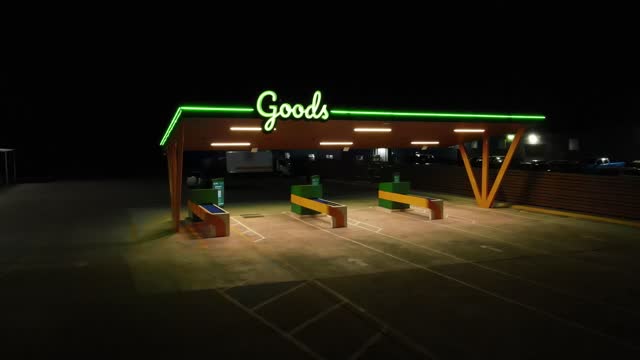
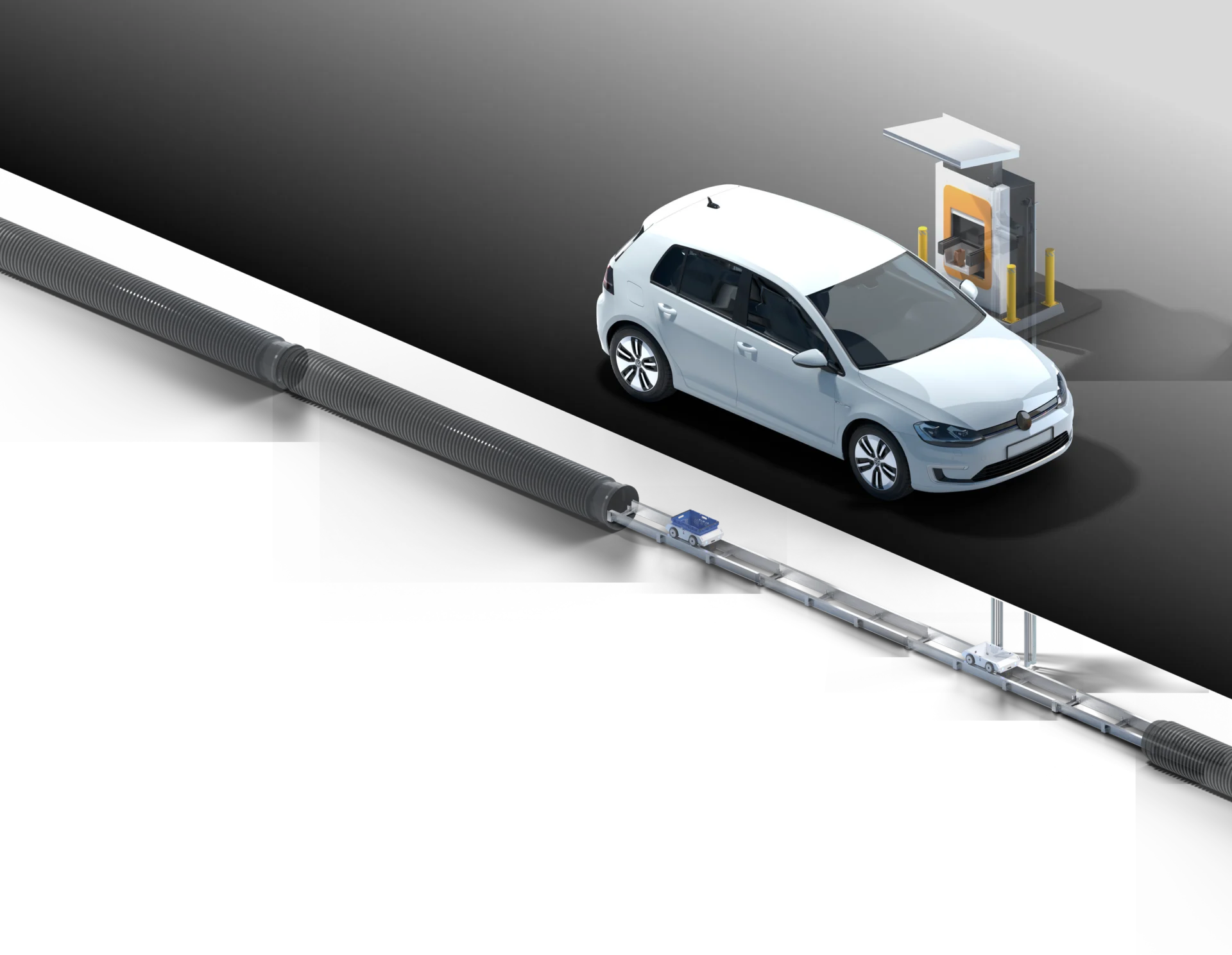
Pipedream’s first consumer-facing application is Goods, a grocery pick-up service that uses a localised version of the pipe network. It’s a working proof of the full pipe network and although it’s in its early days, having opened in January 2026, the system seems to be working as planned.
The model is designed around a single, centralised fulfilment warehouse positioned right next door to the pick-up station. Human pickers inside the warehouse pack up the orders into the totes and place them on to the robotic sleds, ready to be sped out through the pipe to the customer waiting in their car outside. Keeping humans in the loop is a pragmatic choice given that no robotic picking system currently matches the speed and cost-efficiency of trained human labour at this small scale. It also means there is always someone on site ready to help if something goes wrong.
The customer proposition is straightforward: order your groceries online, and within two minutes your items will be ready at the pick-up portal. Once you arrive to collect, the entire interaction takes just 30 seconds, from scanning in with a QR code to retrieving your order. Orders can be collected at any time within the following week, removing the rigid pickup windows that are often a source of frustration for customers using conventional curbside pick-up services.
The purpose-built pick-up stations are in stark contrast with many traditional grocery pick-up services. Most supermarkets were not designed to accommodate curbside pick-up in the first place and as a result the experience is bolted on, leading to constrained time slots, sometimes hours in the future, and inconsistent wait times. On the other hand, Goods is built from the ground up around efficiency, helping to solve many of these problems.
Hub and spoke at city-wide scale
The commercial logic behind Pipedream rests on a hub-and-spoke model taken to its logical extreme. A single centralised fulfilment hub supplies the entire portal network. Because the end nodes – the portals themselves – carry no inventory and require minimal staffing, they can be deployed at a low cost. More portals means more coverage without proportionally more overheads.
For retailers, participation is straightforward: pay for shelf space in the fulfilment centre, stock your products, and let the system handle the rest. When a customer order is placed, it is picked, loaded and dispatched through the underground network. Pipedream thereby becomes, in theory, just another additional sales and fulfilment channel – one that sits alongside e-commerce and in-store without requiring retailers to build or manage new physical infrastructure themselves.
McCurrach says the running costs at launch are comparable to a standard micro-fulfilment centre (MFC). Operators familiar with MFCs will recognise the financial setup here: reduced shrinkage, lower customer-service labour, and centralised inventory management. What Pipedream adds is the ability to add many pick-up locations across a city without multiplying costs.
The bigger picture
McCurrach emphasises that Goods and its grocery pick-up system (while impressive) is just a starting point for Pipedream, not the final destination. The majority of consumers want goods delivered to their homes, and Pipedream’s long-term vision is to serve as the backbone of urban last-mile delivery – a fast, cheap conduit that moves inventory closer to the end customer, while helping to compress delivery windows.
McCurrach suggests that with sufficient network density, an operator like Amazon could theoretically deliver the majority of its catalogue in under 20 minutes. The portals become staging points for delivery drivers rather than consumer-facing pick-up kiosks – or potentially both, depending on location and demand.
In this sense, Pipedream is not only a new delivery method. It aims to establish itself as a new layer of urban logistics infrastructure – one that, with coverage across a whole city, could reshape the economics of e-commerce fulfilment as significantly as the introduction of the parcel locker or the dark store. It’s a rare attempt to solve the last-mile problem through the creation of new infrastructure rather than optimising existing processes. As such, the implications for retailers and logistics operators are worth keeping an eye on.
While it could be tricky to retrofit the required infrastructure in older European cities, for example, cities built on a grid offer a perfect home for this type of underground network.
For those with operations in Austin (or Dallas, given the start-up’s plans to launch there in the near future) the practical question is whether the shelf-space model offers a viable new fulfilment channel – particularly for high-velocity grocery and convenience categories where speed and maximum command a premium. For the broader industry, Pipedream is a signal that the infrastructure layer of retail is still very much up for reinvention.