
There is a familiar rhythm to how older generations receive the youngest cohort entering the workforce. They’re lazy. They’re entitled. They don’t know how to work. The complaint is basically always the same whether you’re talking about Baby Boomers criticising Millennials in the 2010s or today’s managers wrestling with Gen Z. In fact, a survey of managers who find Gen Z difficult found that a third of them would simply prefer to hire Millennials instead – conveniently forgetting that Millennials were once the generation they couldn’t stand.
This pattern of generational scepticism should surely make business leaders pause before accepting this age-old narrative at face value. That said, the challenges are real, even if the framing often isn’t. Understanding what’s really going on is now a genuine business imperative, as it shows how businesses must evolve in the years ahead. By 2030, Gen Z will make up nearly a third of the global workforce. Companies that fail to understand them won’t just struggle with culture, they’ll struggle to compete full stop.
The soft skills deficit: fact, fiction and context
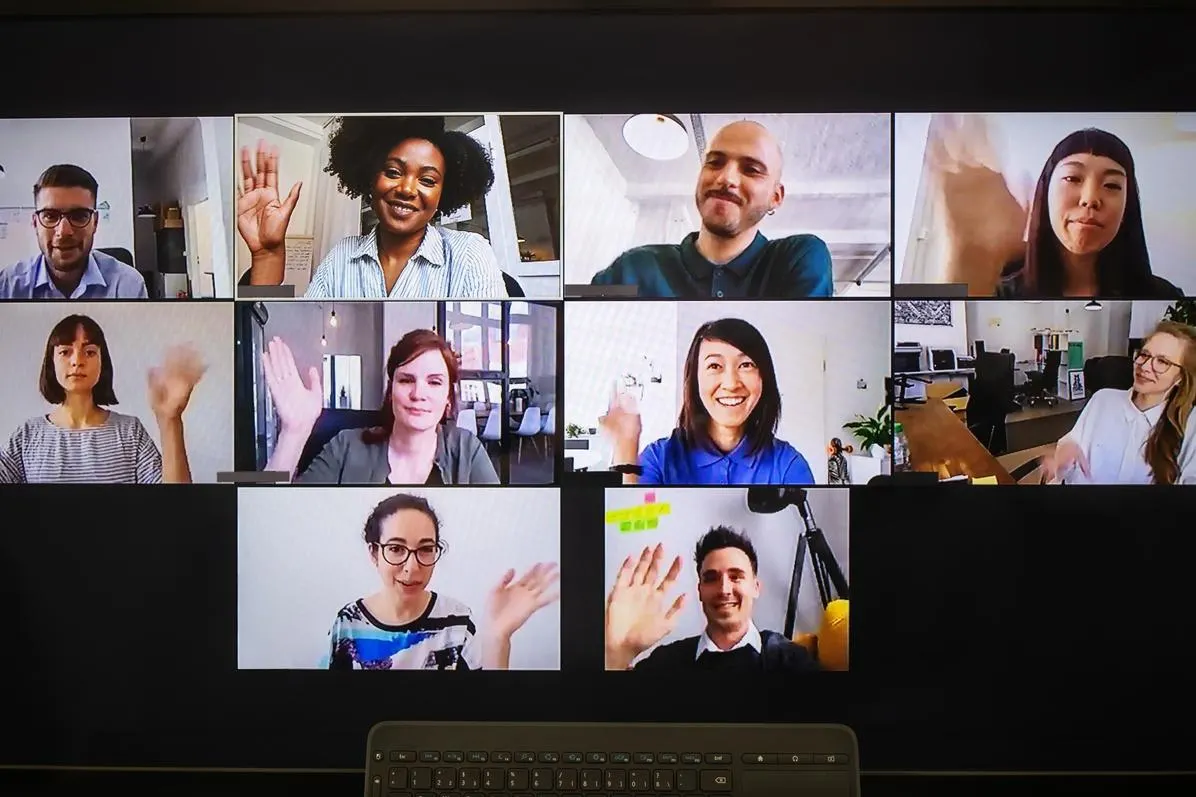
The headlines give us some striking figures. A 2024 Harris Poll found that 82% of managers say their Gen Z hires need additional support, time and training to develop soft skills. Three in four managers report it’s harder to train new hires in soft skills than in actual technical skills. A 2025 survey found that 56% of business leaders blame weak soft skills for unpreparedness among entry-level workers, up from 50% the year before. By virtually any measure coming from employers, there is a perceived gap in interpersonal readiness among this generation.
However, there’s some important context to unpack here that complicates this seemingly straightforward situation. Gen Z entered the workforce and finished their formative educational years precisely when the world shut down during the pandemic. Zoom lectures replaced seminar rooms. Remote internships replaced office floors. The organic, observational learning through which soft skills are quietly absorbed, whether it’s reading a room, navigating office politics or honing professional communication, simply didn’t happen the way it did for every prior generation. This cohort had to experience their early career in a completely upside-down experience of work. In this sense, the soft skills gap is less about who they are and more about what happened to them.
Gen Z themselves broadly acknowledge it. Nearly 80% of Gen Z employees surveyed by Harris Poll said that some ambient workplace soft skills can’t be taught and can only be gained by watching more seasoned employees over time. That’s not denial — it’s a reasonably accurate description of how professional socialisation works, and a signal that this generation understands what they’re missing and why. Yet research consistently finds that Gen Z individuals tend to rate their own soft skills highly, creating a growing gap between self-perception and employer perception. This isn’t unique to Gen Z (overconfidence among early-career workers has always been common) but combined with less in-person mentorship and feedback, it means that self-correction takes longer to kick in.
Soft skills are changing, not disappearing, and framing this purely as a deficit is reductive. Gen Z’s strengths include empathy, comfort with direct emotional expression, openness to transparent feedback structures, and a collaborative instinct that resists unnecessary hierarchy. Where conventional soft skills were built around an office-centric, face-to-face, hierarchical world, Gen Z is navigating a totally different one, from managing the use of AI tools to building professional relationships solely through video calls.
The conclusion here is that the soft skills deficit is real in measurable, consequential ways, but it’s also substantially explained by context, is not unique to this generation’s character, and can be corrected, if businesses choose to invest in correction.
What Gen Z actually wants (and why it’s not unreasonable)

Understanding Gen Z’s workplace expectations requires an understanding of the world they grew up in, because that world was genuinely different. They came of age amid the 2008 financial crisis, a pandemic, climate anxiety, digital media’s distortion of reality, and an economy in which the traditional professional contract demonstrably broke down for their parents. They’ve watched workplaces demand loyalty and offer instability in return. Their scepticism about inherited workplace norms isn’t entitlement, it’s based on the way things have changed in recent years.
Flexibility is now seem as a baseline, not a bonus. Gen Z views hybrid and remote working arrangements not as perks, but as the normal state of affairs, because for much of their formative working life, they were. Over 90% expect some form of flexible work arrangement. Notably, more recent data shows a softening of this – the number of Gen Z workers who would reject a job without flexible working dropped from nearly half in 2024 to just over a third in 2025, as in-person time is increasingly valued for learning and collaboration. What they’re really asking for isn’t necessarily to work from home forever, it’s to be trusted to deliver results, and to have autonomy over how they organise their time.
Purpose matters, but perhaps not as much as the press suggests. 75% of Gen Z say they want to work for organisations whose values align with their own. Yet only 43% expect employers to take a public stance on social issues, a distinction that often gets blurred. Many Gen Z workers are pragmatic in ways that counter the caricature. They value job security and financial stability, they’re realistic about career timelines, and research from the Dartmouth Partners Gen Z Hiring Report found that over 80% rank training and development as their highest priority — above flexible working, above culture perks, and above brand prestige. They want to grow, quickly, with clear and transparent paths to do so.
Mental health support is now also a baseline expectation. Over 60% of Gen Z workers rank mental health as their number one workplace concern. This isn’t weakness, it’s a reflection of a generation that grew up normalising conversations about mental wellbeing in a way previous generations largely didn’t, and extends into a clear demand for employers to follow. Those who dismiss it as oversensitivity could find they’re simply not competitive for talent.
Feedback structures may also need revisiting. Annual performance reviews were never the ideal mechanism for human development, but Gen Z’s expectations accelerate the case against them. They want regular, direct, honest feedback — not to be coddled, but to improve and to feel seen. Organisations that build this in meaningfully will develop more capable, loyal staff. Those that don’t will experience the quiet exit, with 65% of Gen Z workers saying they would rather leave silently than confront poor leadership.
This is a generation that entered the workforce under conditions that stripped away many of the norms in which professional maturity traditionally developed – and they are navigating that with a great deal more self-awareness than they’re often given credit for. Their expectations are, in many cases, simply accelerating changes that would have arrived anyway. The businesses that will come out ahead will be those who invest in developing the skills and professional capabilities Gen Z lacks, and show genuine willingness to evolve the structures and culture of their organisations in line with changing expectations.
Key takeaways
Flexible work is no longer a generational preference — it is increasingly a cross-generational expectation.
Outcome-based performance metrics are potentially more effective than presence-based ones
Mental wellbeing support has become a mainstream talent retention issue, not a niche one
Rapid feedback loops and clear development pathways make organisations more agile and retain institutional knowledge better
Hold firm on accountability – learn to accommodate and invest in Gen Z without loosening standards
Create mentorship programmes, reverse-mentoring (where younger employees share digital and cultural fluency upward) and structured feedback systems