At GDR we’re always on the lookout for category-defying locations that stretch the definition of what a physical store is. This year one of the shining examples has been luxury fashion brand Dior’s recently reopened Parisian flagship at 30 Avenue Montaigne.
The spiritual home of the brand since 1946 when Christian Dior moved in and launched his first collection there, the brand has undertaken an ambitious overhaul of the location, despite it already being its number one store globally in terms of sales volume.
According to the brand’s CEO Pietro Beccari the relaunch, overseen by Peter Marino, came about as he started to future-proof the brand by “thinking of ways to make Dior even more exceptional”.
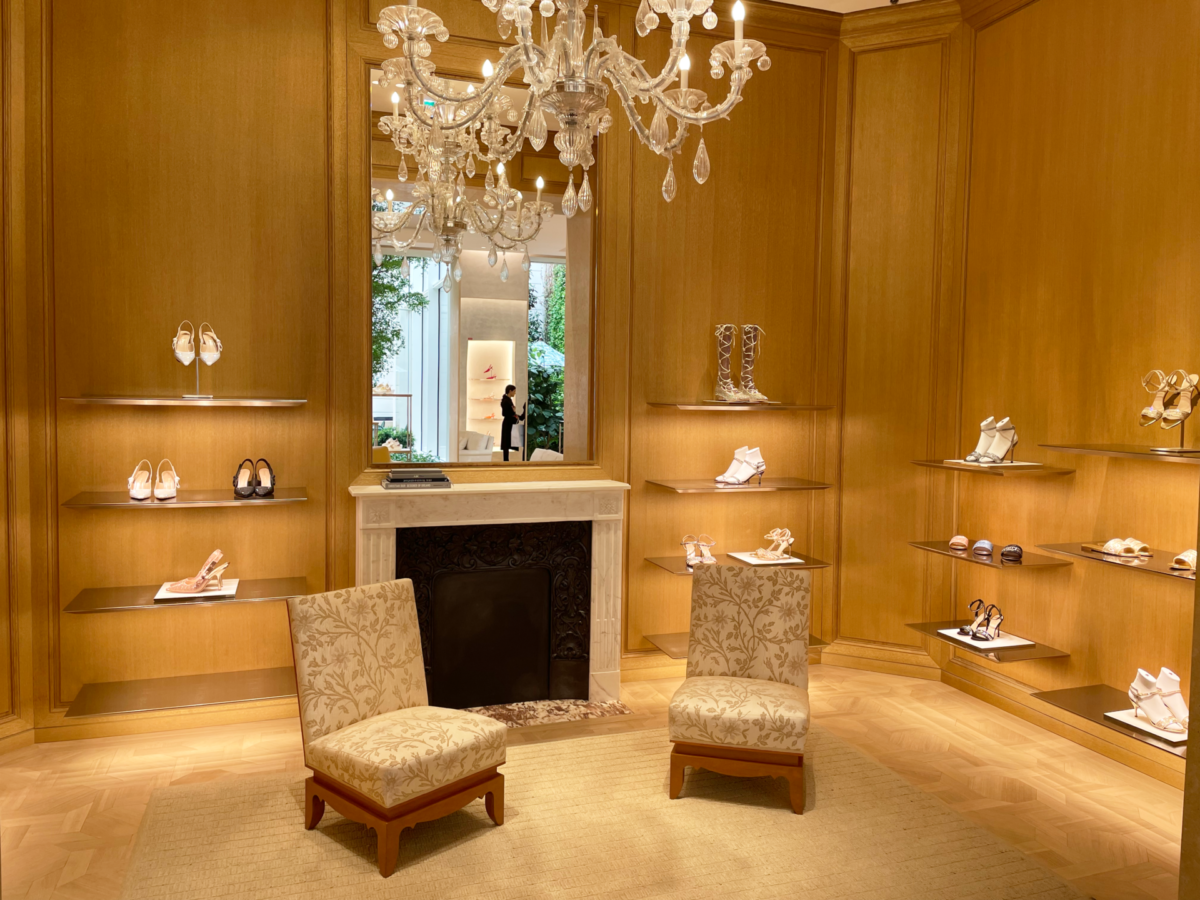
The result is hybrid retail on steroids, an onion of a location that offers more with every layer that is peeled back or nook and cranny that is explored. Previously a 1,000sqm retail space and home to the brand’s ateliers and 600 office staff, the retail area has now doubled to 2,172sqm displaying products from its ready-to-wear, leather goods, jewellery, beauty and Maison homewares collections.
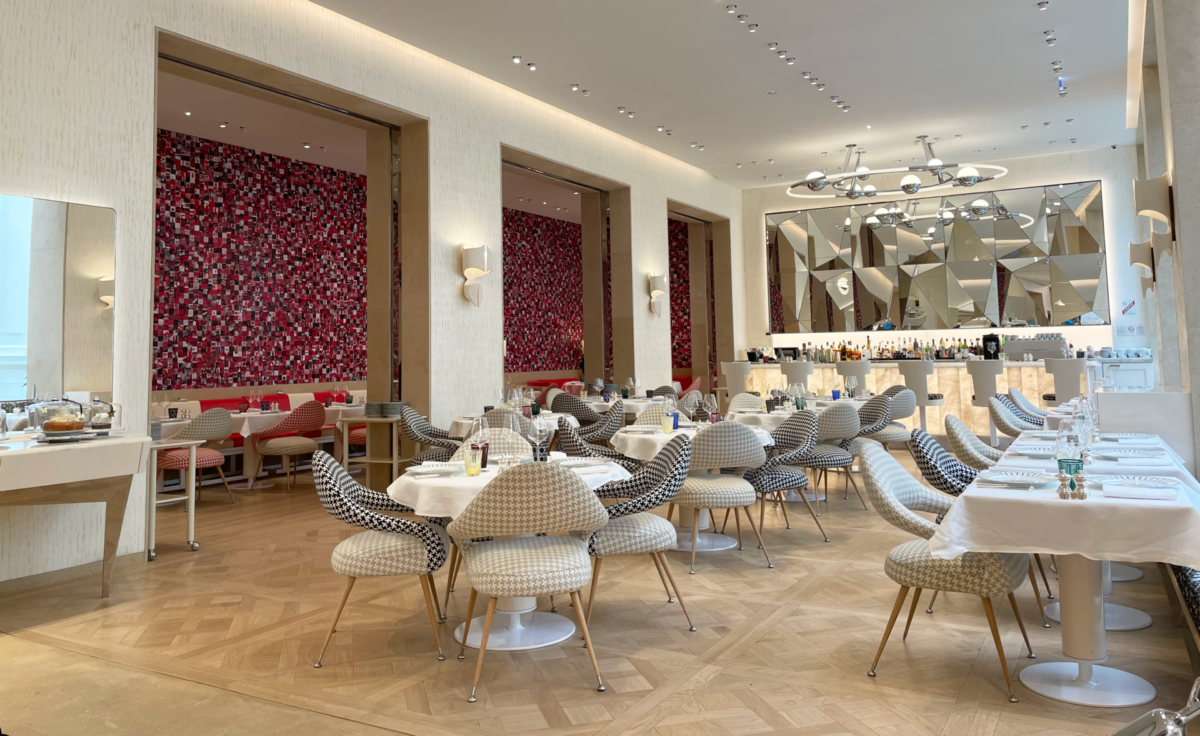
Beyond retail, the flagship includes a restaurant and patisserie headed up by French chef Jean Imbert, three gardens and even a private apartment that offers guests 24-hour access to all parts of the store. That’s not all. Next door to the store La Galleria Dior is a permanent 1,577sqm museum celebrating the history of brand’s couture collection with colourful, dazzling displays of its archives across four floors that will be refreshed every three months.
Struck by the scale of the relaunch and the forward-thinking ambition of the already-successful location, I simply had to drop in when I was in Paris to find out what sets the iconic flagship apart. Here are my top 5 takeaways:
1) Serious street appeal is still a powerful footfall driver
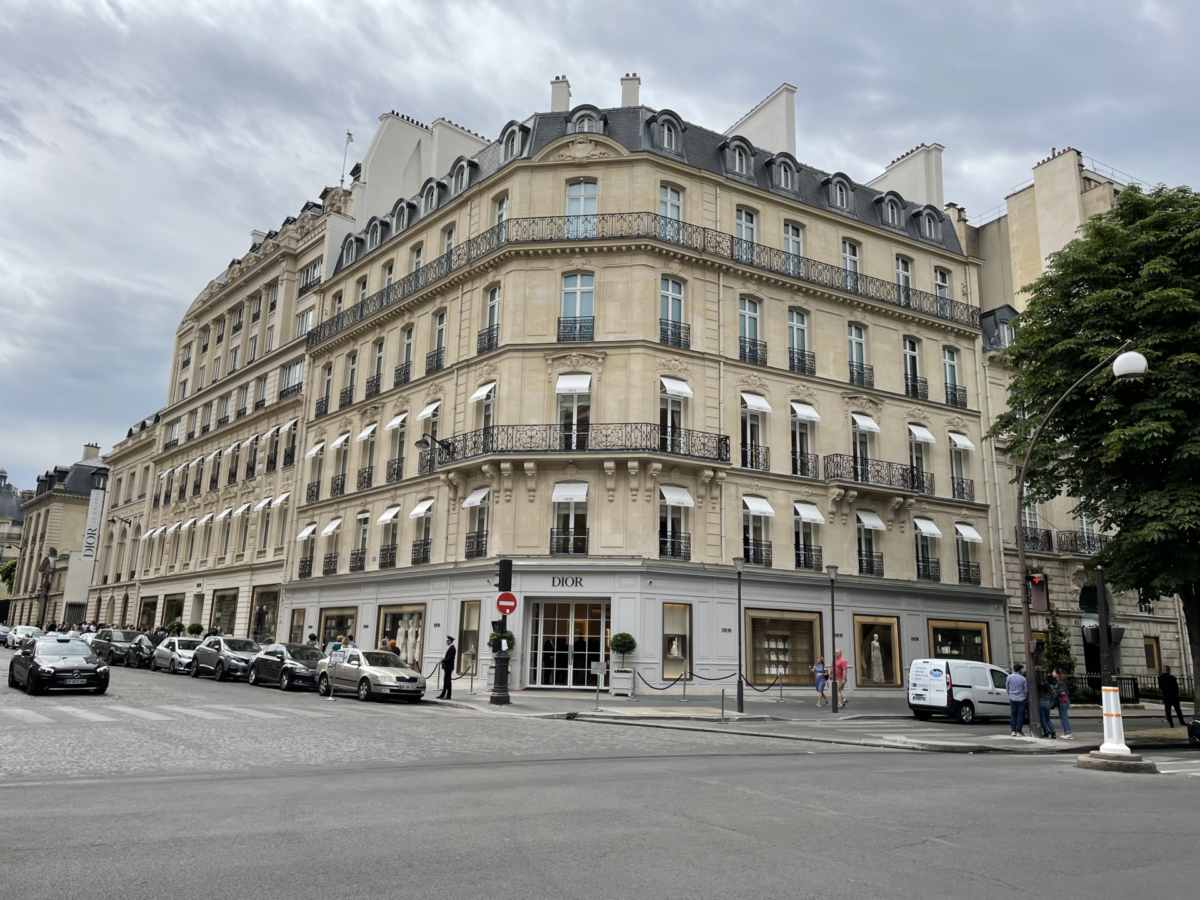
The allure of the store hits home long before entering through its grand double doors. The scale and architecture of the striking five-storey building on the corner of Avenue Montaigne and Rue Francois 1er, just a stone’s throw from the Champs-Elysée, even stands out amongst some of the world’s other leading luxury brands on the same street.
The elegant simplicity and symmetry of the imposing facade, which is adorned by scores of windows with black railings and white Dior-branded awnings, creates a captivating sight from afar. But as, you move nearer, it is the intricately designed window displays that really become the focus, with opulent scenes offering a taster of the couture fashion, jewellery, and homewares products available within. The windows also celebrate the craft and history of Dior by displaying atelier sketches and silhouettes from the couture collection alongside the final pieces themselves.
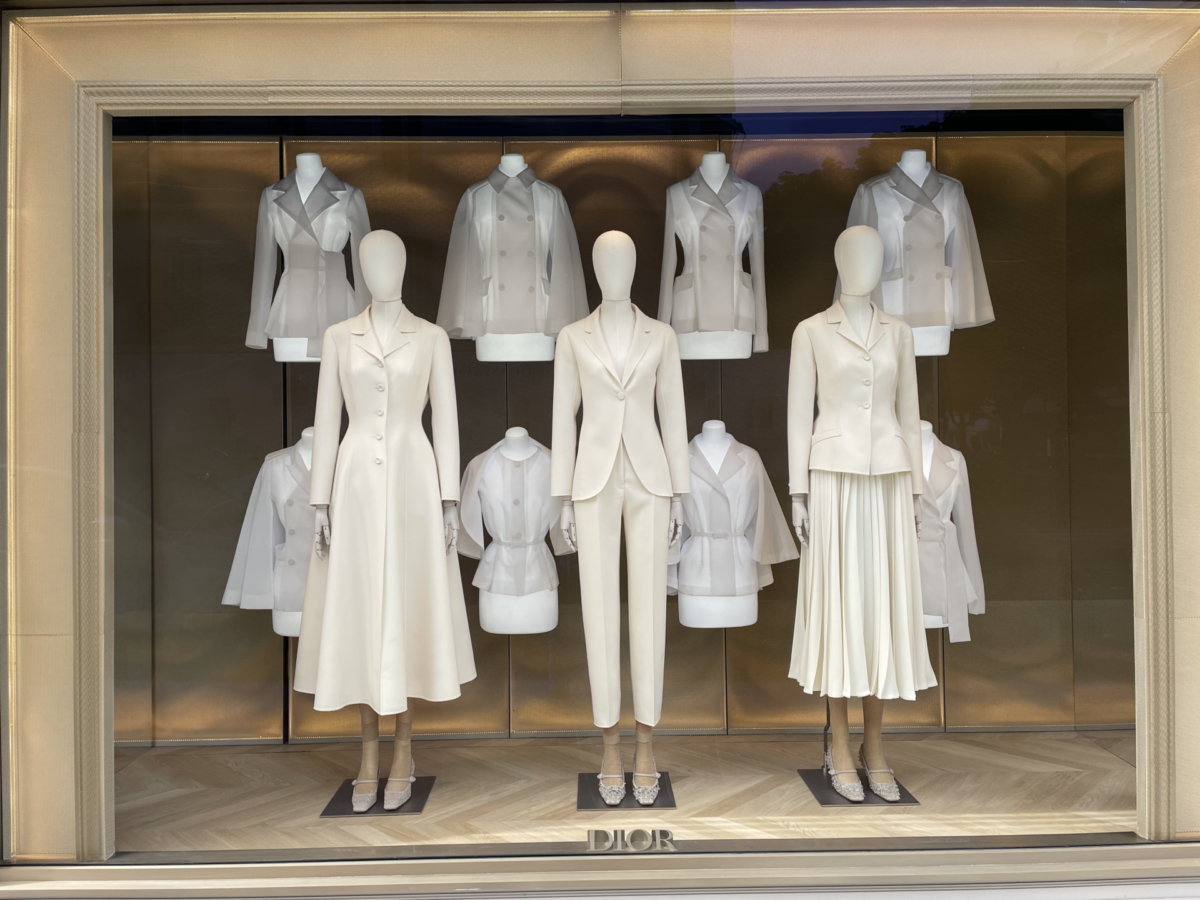
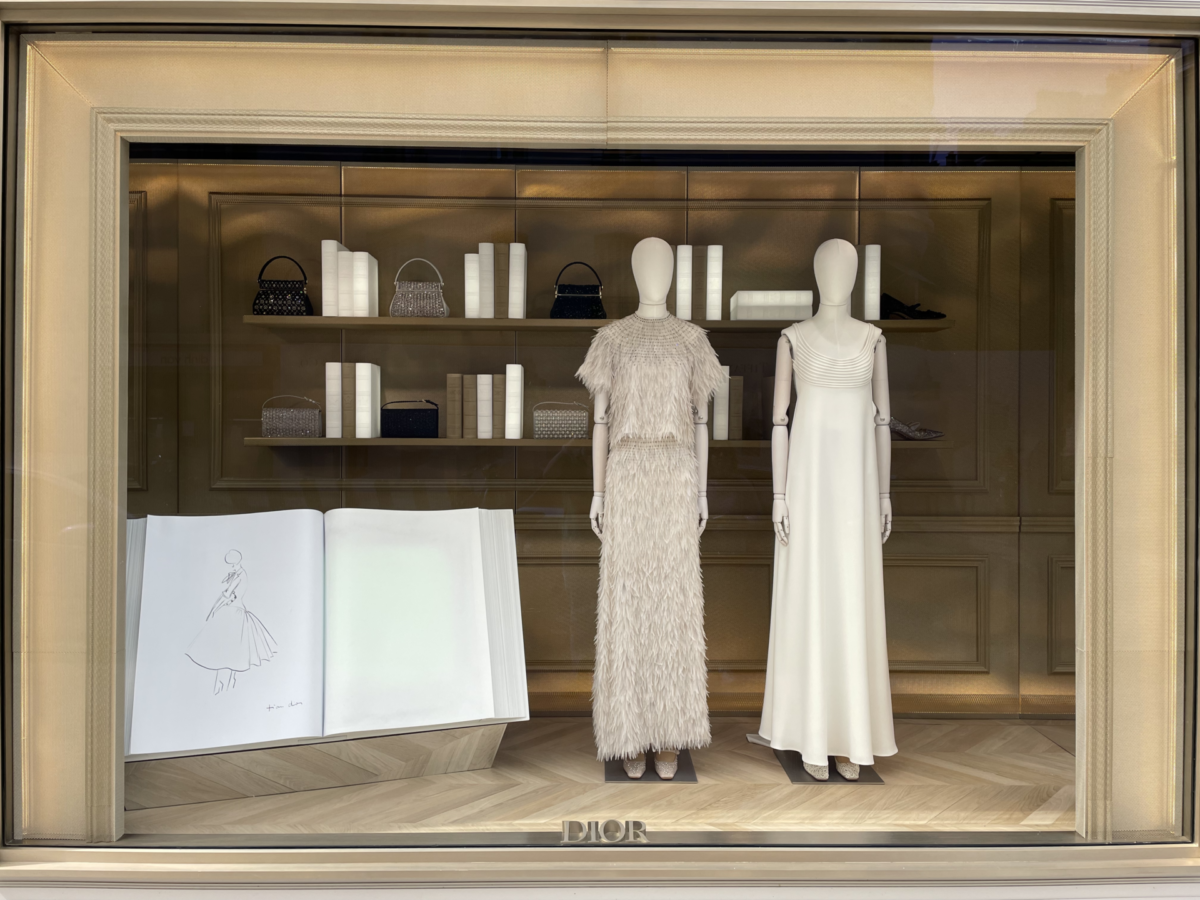
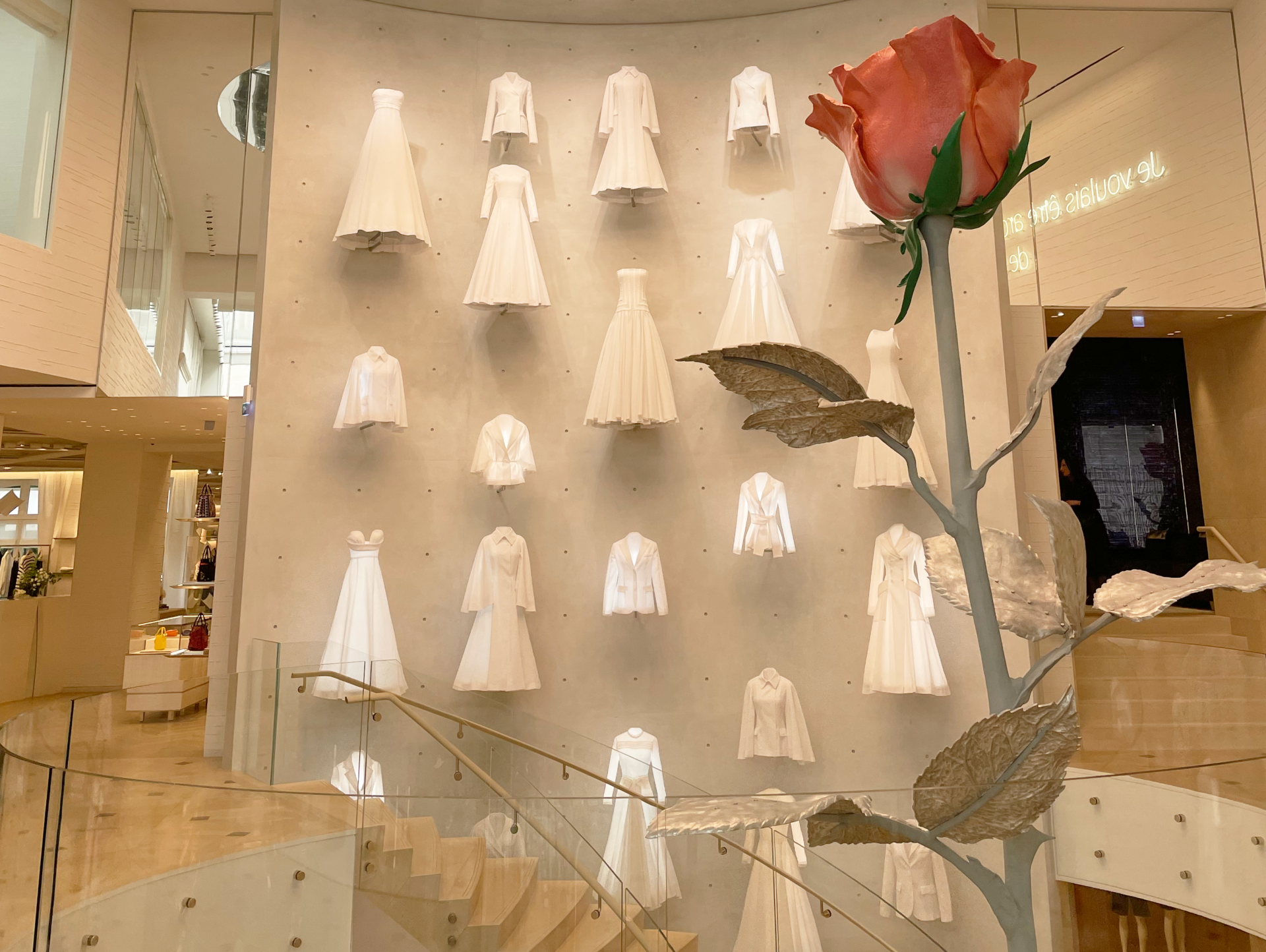
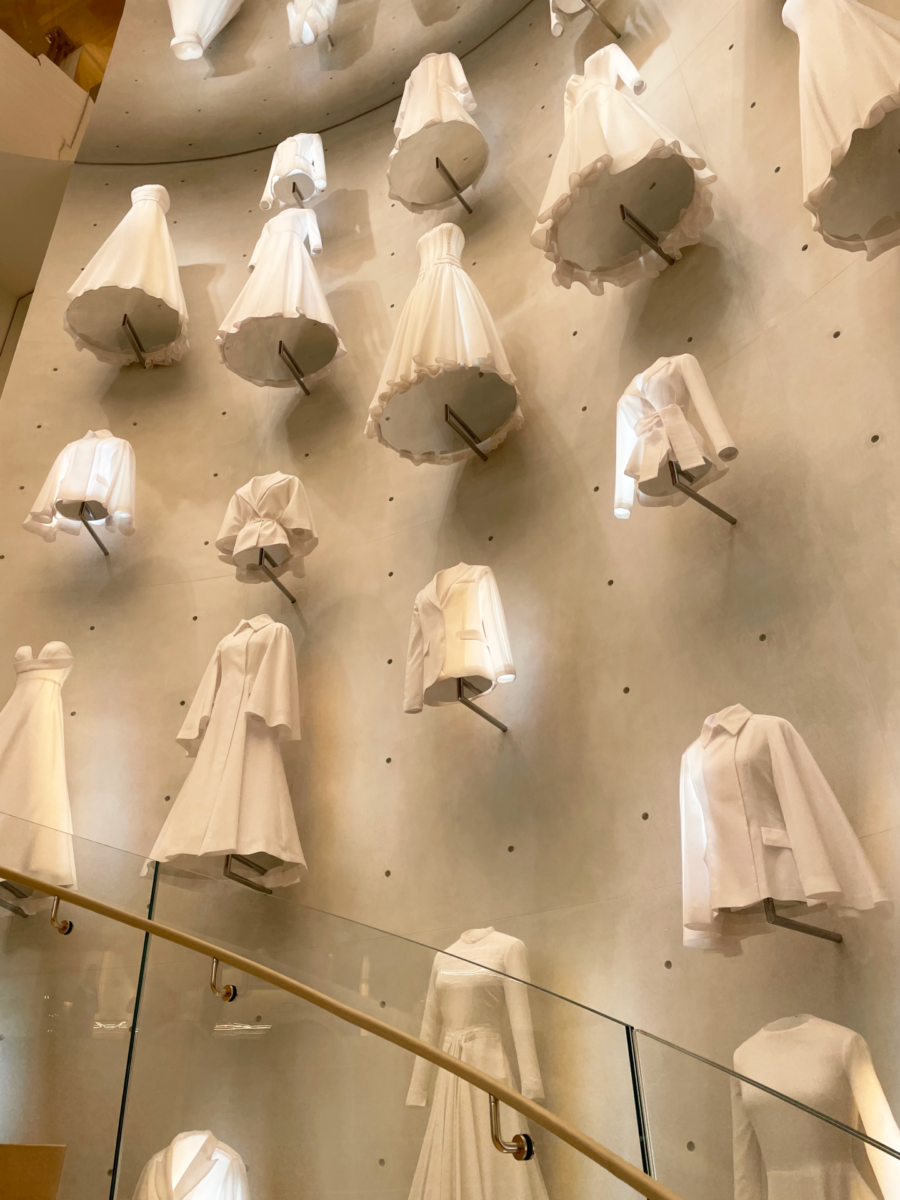
The attention to detail on the street at 30 Avenue Montaigne is a serious footfall driver and it sets the tone for the experience inside. Indeed, the motifs of the couture sketches and silhouettes are referenced in many of the flagship’s statement displays, most notably in an ethereal installation that lines the elegant spiral staircase, which dominates the triple-height rotunda in the centre of the flagship.
2) Exceptional staff can be a differentiator
Upon entering the store the first thing to catch my attention was the sheer number of staff. Including the doorman, I counted seven people who greeted me with a hearty “Bonjour” before I’d stepped more than a few feet over the threshold. As I moved through the flagship it never felt as though staff were getting in my way but, as in a Michelin-star restaurant or five-star hotel, an expert was always unobtrusively lurking nearby to anticipate every need.
This level of service is no doubt what luxury shoppers expect when they are potentially making tens of thousands of dollars worth of purchases in-store, but it struck me that the staff were also playing a key crowd control and segmentation role too. Unlike many other luxury brands like Chanel and Balenciaga, who are moving towards private stores for their top clients, Dior has clearly made the decision to give 30 Avenue Montaigne a dual role, servicing the brand’s VIP customers, while also embracing its potential as a tourist destination for discerning travellers.
While the patisserie offers a lower-price point access to the brand, many of the tourists I saw were simply content to respectfully move through the space as they would the city’s many museums and churches. Dior’s ability to balance the long-term brand building potential of these non- or low-paying customers with the needs of its genuine shoppers is only possible because of the attentiveness of its staff, who effortlessly identify VIPs and ensure they get the full luxury experience, while shielding them from the trawl of tourists.
As tech-based personalisation backed by data continues to abound in retail, Dior gives a timely reminder of the power that knowledgeable human staff still hold, whether they’re empowered by tech or not.
3) Scent can transform a retail experience
For a brand so well known for, among many other things, its luxury fragrance lines, one might expect a Dior flagship to have its own bespoke scent. However, I was interested to discover that the brand has instead gone down another route, embracing Monsieur Dior’s love of flowers. Greenery, trees and displays of fresh, seasonal flowers are abundant throughout the flagship, most notably in the cafe, which is positioned as an indoor garden.
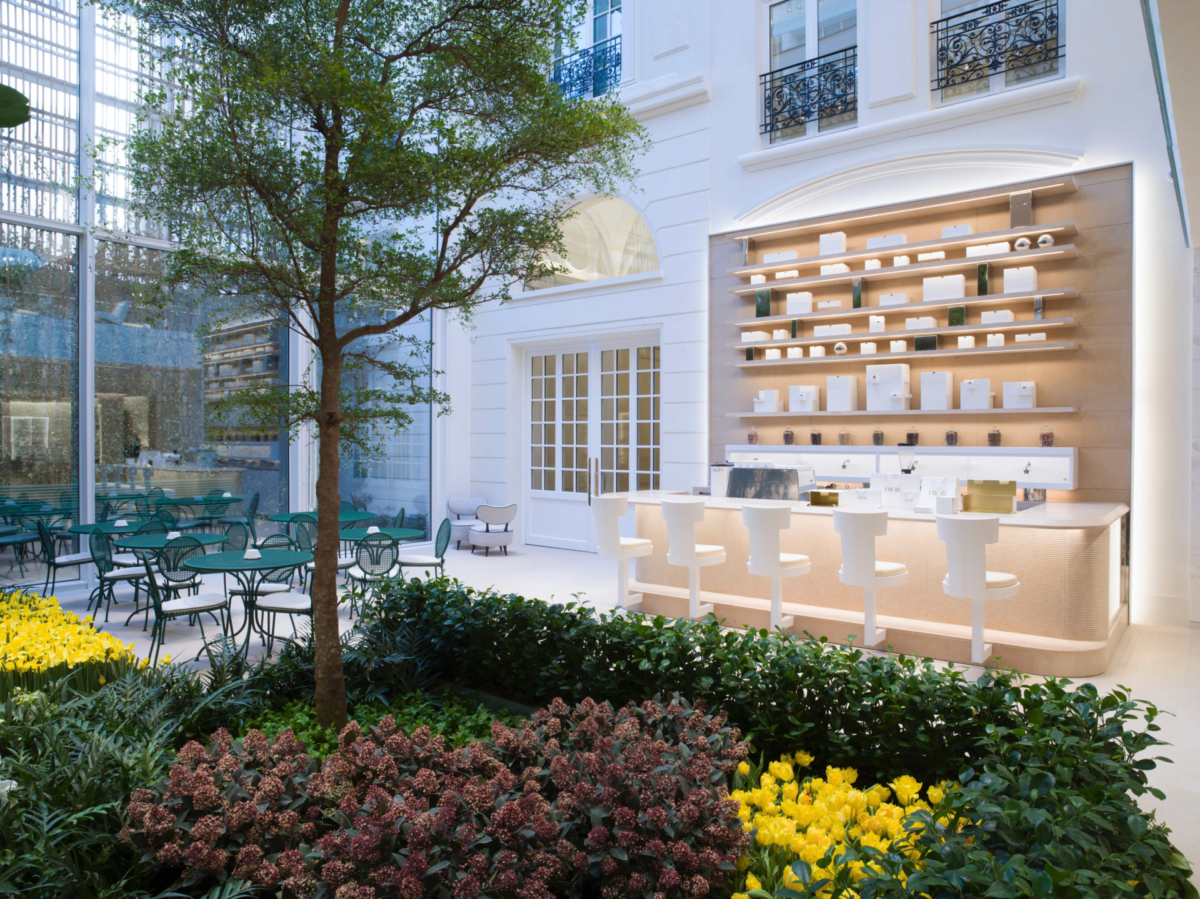
The effect of this on the fragrance and atmosphere within the flagship can’t be overstated. It creates a fresh, powerful aroma that offers the perfect antidote to the polluted city beyond the walls. This only heightens the perception of the hybrid location as somewhere to spend time while escaping from the hustle and bustle of the French capital.
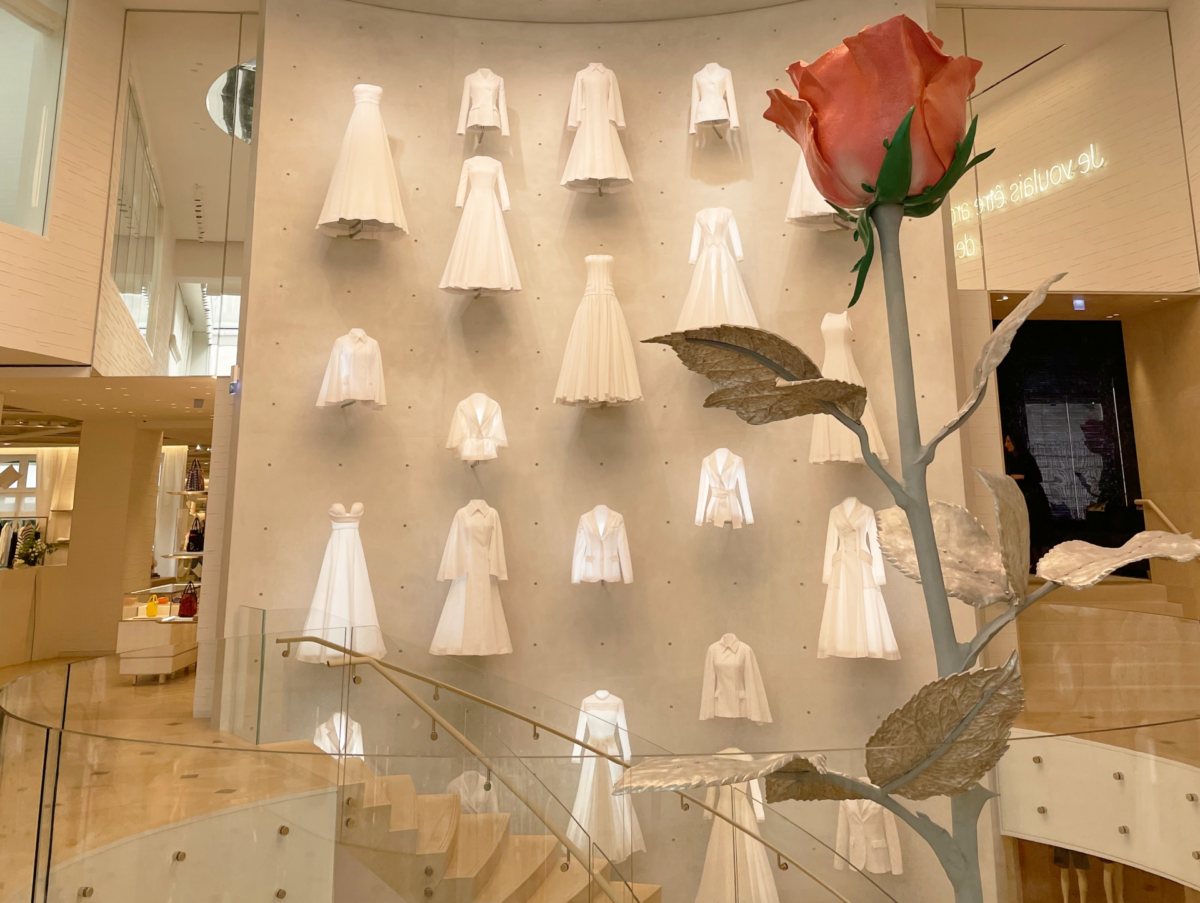
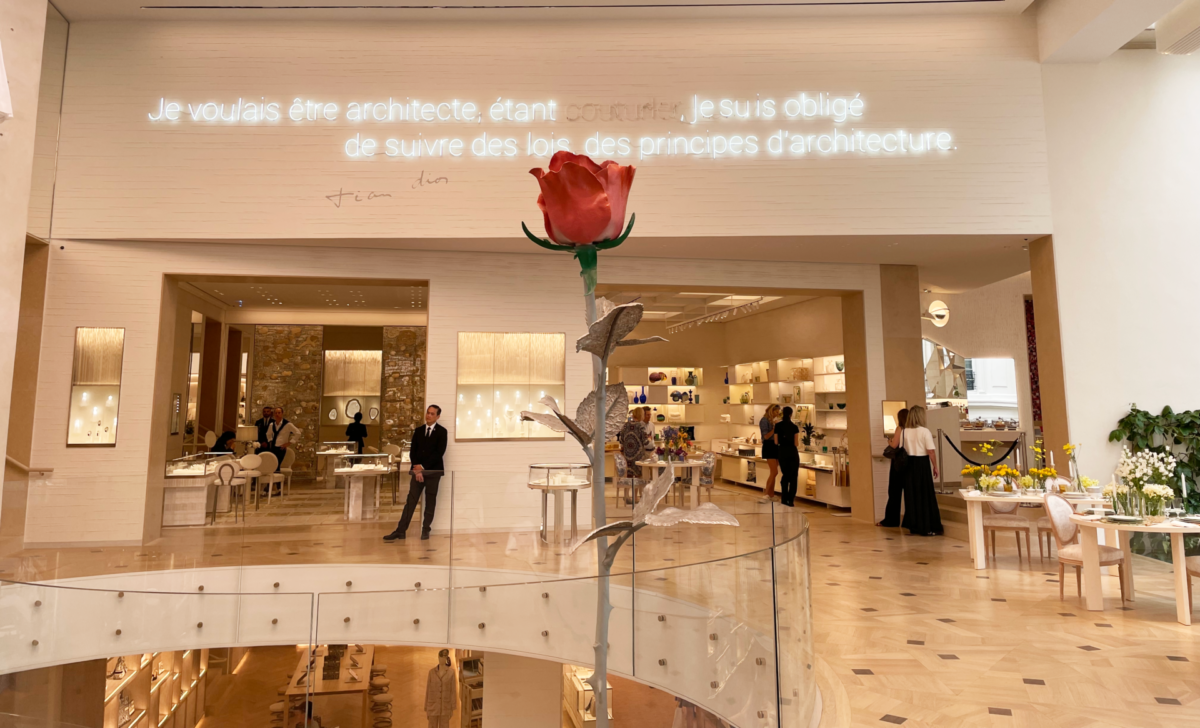
Floral motifs also play an important design role throughout the store, seen most prominently in the 26-foot-tall rose sculpture by Isa Genzken that runs through the middle of the spiral staircase.
4) The low-tech approach can work in the right context
While the La Galleria museum space brings the Dior story to life by merging physical products and artefacts with engaging projection mapping and lighting displays (see the video below), the store itself is very light on customer-facing technology.
The only exception to this I saw is a table with six digital screens where visitors can search a range of customisable products and see what they would look like with their initials embossed on them. In truth, this seemed to be more of a place for serious shoppers to dump their kids, rather than an integral part of the customer journey. But, as GDR explored in our recent Unapologetically analogue trend, the low-tech approach is still perfectly legitimate in the omnichannel age, so long as the experience, product, merchandising and staff are as good as those at 30 Avenue Montaigne.
5) Flagships must resonate around the world
If the traditional role of the retail flagship is to drive ROI and offer visitors a unique and unforgettable experience, in the omnichannel era they must now also be a beacon to engage with global consumers far beyond the recesses of the physical location.
In most cases this materialises through livestreamed events and content streamed from the flagship store, but Dior has taken the positioning of its flagship as a global symbol of the brand more literally.
Just one month after 30 Avenue Montaigne was relaunched in Paris, the brand opened a store heavily inspired by it in the Seongdong neighbourhood of Seoul. The facade of the South Korean store is based on the iconic design of the Parisian store, but is made using steel and glass elements to create what the brand refers to as a glasshouse-style structure. This creates a shiny, reflective finish that reimagines the elegance of the original building through the lens of the Korean luxury aesthetic. Inside, the store also merges elements of the merchandising approach seen in Paris, with a more local flavour.
Dior CEO Pietro Beccari said that the relaunch of 30 Avenue Montaigne was more than a reopening, but “a total reinvention and a living symbol of our DNA”
By transporting elements of this DNA to its global store estate, Dior is banking on 30 Avenue Montaigne elevating perceptions of the brand, not just for visitors to Paris, but amongst luxury shoppers around the world.
If you’re interested in any of the themes discussed in this article, get in touch with rachel@gdruk.com to find out how GDR’s consultancy, inspirational speaking, trends and sector reports can help drive positive change in your business.