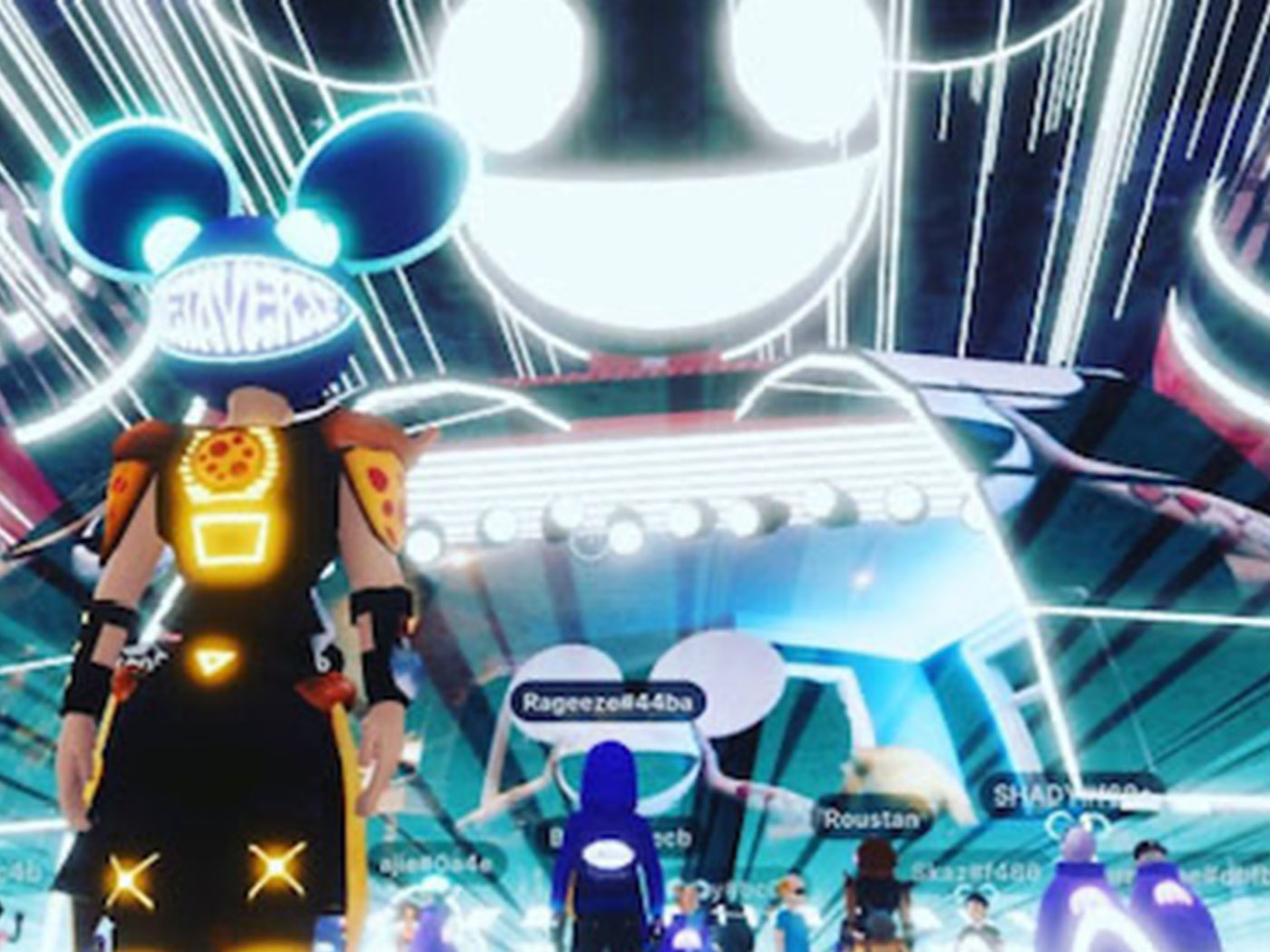
GDR Managing Director Rachel Wilkinson visited Decentraland’s inaugural Metaverse Festival to see how entertainment, retail, art and community collide in the fast-growing virtual world.
I am not a gamer, a 15-year-old school boy, or a tech nerd, so I’m slightly embarrassed to report that I recently had a brilliant time spending a Sunday night at/in/on/within (I don’t know which is the correct term!) Decentraland’s inaugural Metaverse Festival. I DO know festivals, though, and this was a pretty good recreation of the type of niche festival you only get an invite to if you’re in the know and on the list. In this case, I was already signed up to Discord, (Decentraland’s favoured social network) and they had sent me a pretty innocuous / almost missed email, inviting me.
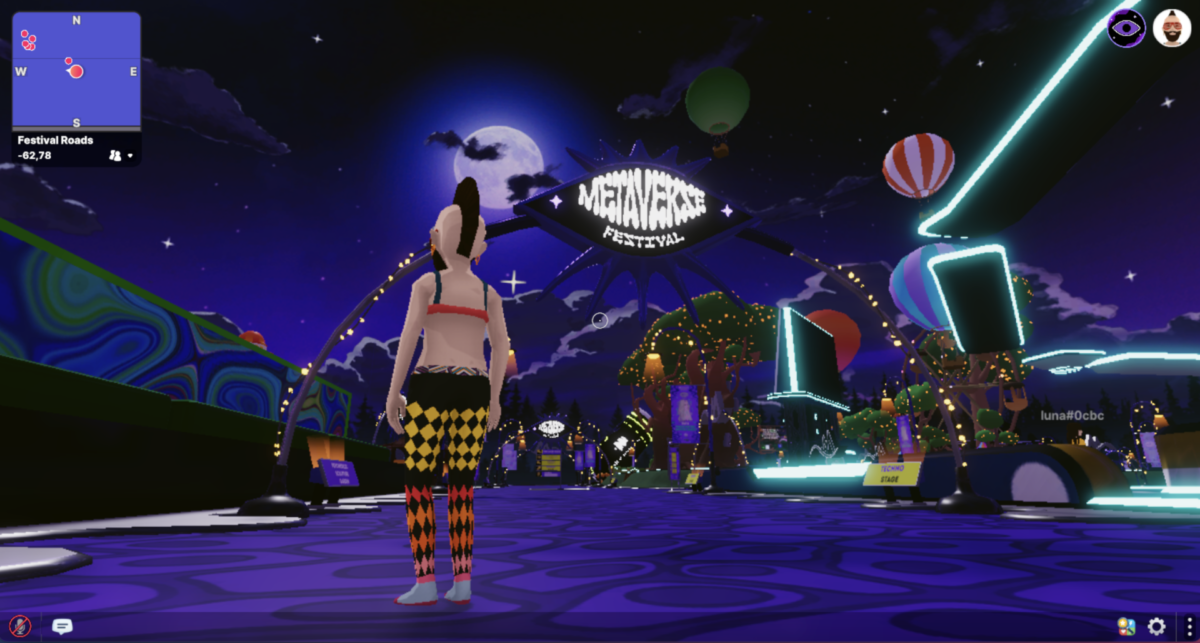
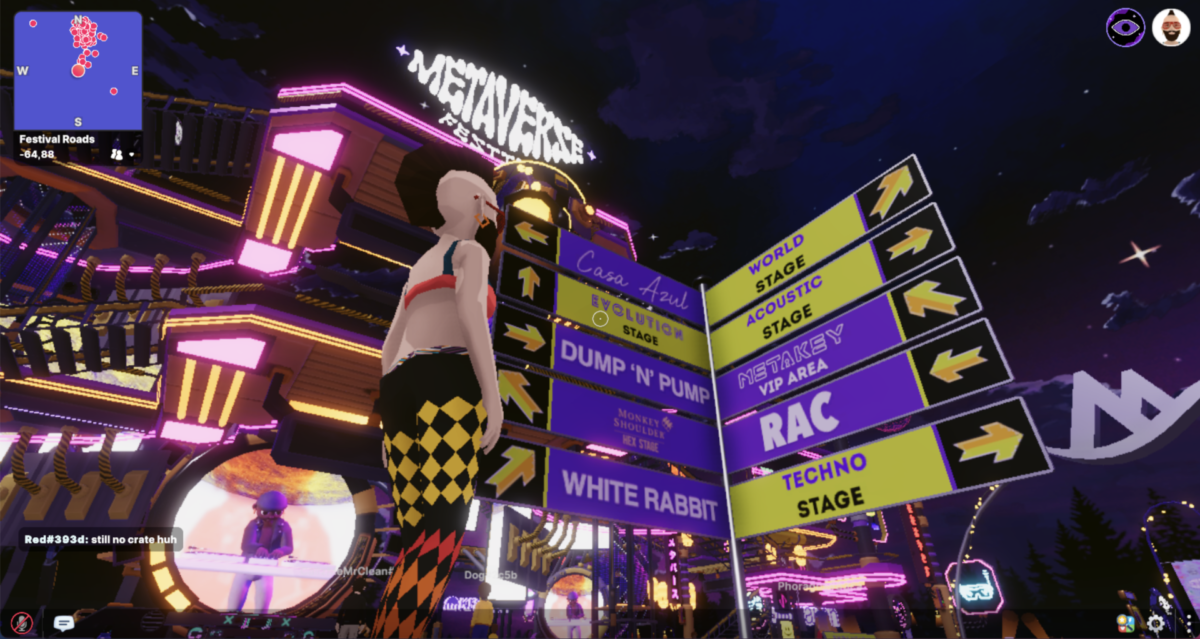
Unlike real festivals, where you have to spend a fortune to drag yourself, your tent and wellies to the other side of the country/world and hang out with a million inebriated kids in torrential storms and five inches of mud, this was a far more civilised (and lazy) affair, where all the action occurred in a virtual world, without me moving from the sofa and barely lifting a finger. Honestly, this is a key point: one of the things that makes Decentraland so appealing, is that it’s so easy to get immersed and involved in its metaverse.
The rise of Decentraland
In the five years since launch, Decentraland has transformed from a slightly clunky digital retail estate gaming site, into a far superior rendered virtual metaverse of shopping centres, art galleries, yoga centres, plazas, game zones and desirable locations you want to browse around and be (virtually) seen at.
Decentraland is split into land plots, which are virtual digital locations with rather handy digital coordinates. Like a geolocator, you can ‘jump’ into these land plots and you’re right in the action, within seconds. So I went straight from the email and a quick scan of the Metaverse Festival line up, to selecting my stage and artist to watch.
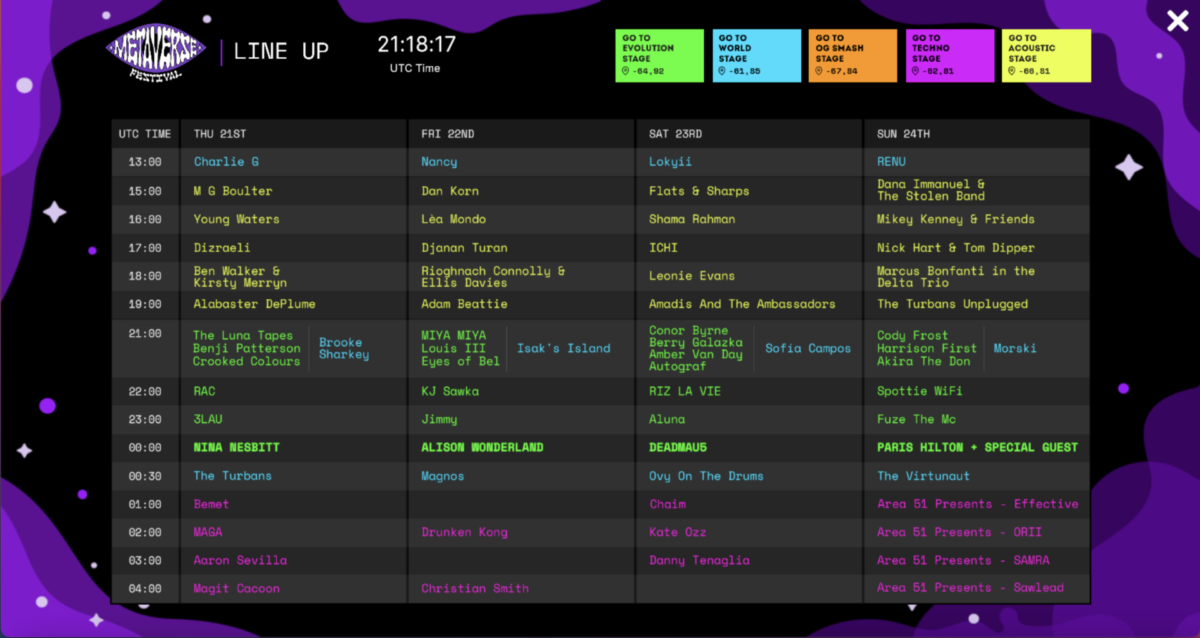
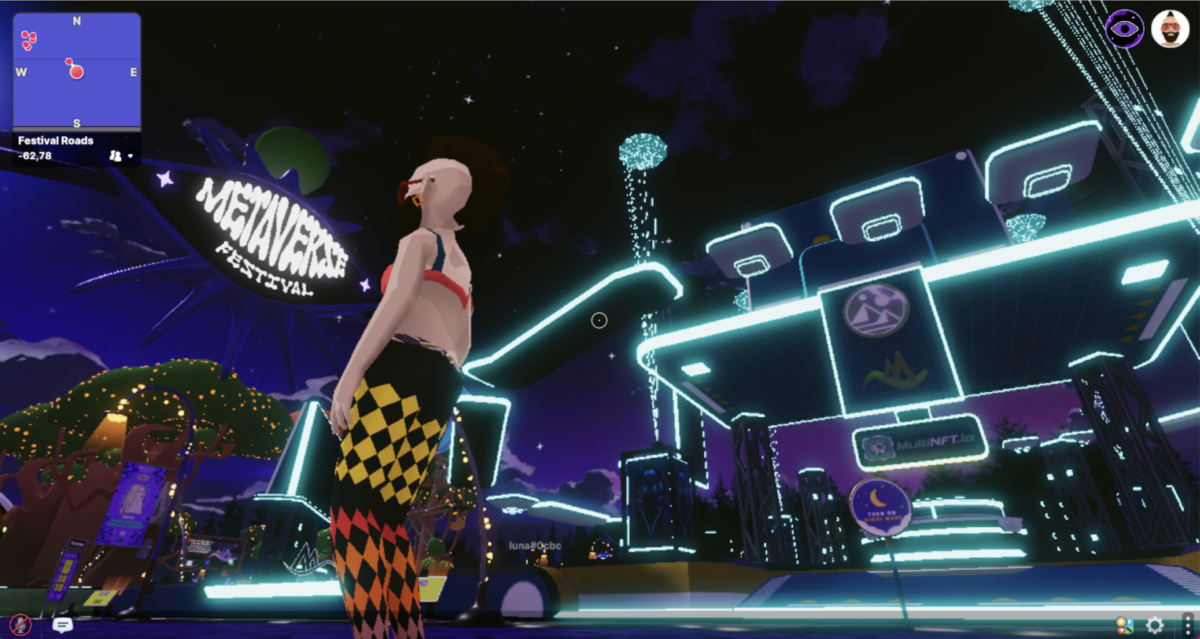
The festival was actually on for four nights and I was just catching the tail end of the Sunday headliners as I tuned in (Paris Hilton was the hot DJ that night) and I was gutted to see that I had missed Deadmau5 the night before. Surprisingly, the line-up was quite impressive – clearly a lot of effort had been made to get a mix of heavyweight known artists and up and coming new talent.
The avatar economy
I had completely forgotten that I had created a ‘non binary’ avatar for myself weeks before (because really, is gender at all relevant in a virtual world?) and had created a mash up of a 70s retro punk, Gwen Stefani’s 90s look and a bearded Shoreditch hipster. I thought my ‘look’ would stand out and people would be impressed, but I had completely underestimated the wackiness of the metaverse crew.
Most of the crowd’s avatars were dressed in their Sunday best to impress, flaunting their overpriced NFT designer digital labels and a lot of Deadmau5 neon mouse ear ‘digital merchandise’. I spent the next hours jealously eyeing up everyone’s outfits, shoes with flames and digital features (there was a lot of ‘flying’ going on) wishing I’d made more of an effort and bought up some MANA currency!
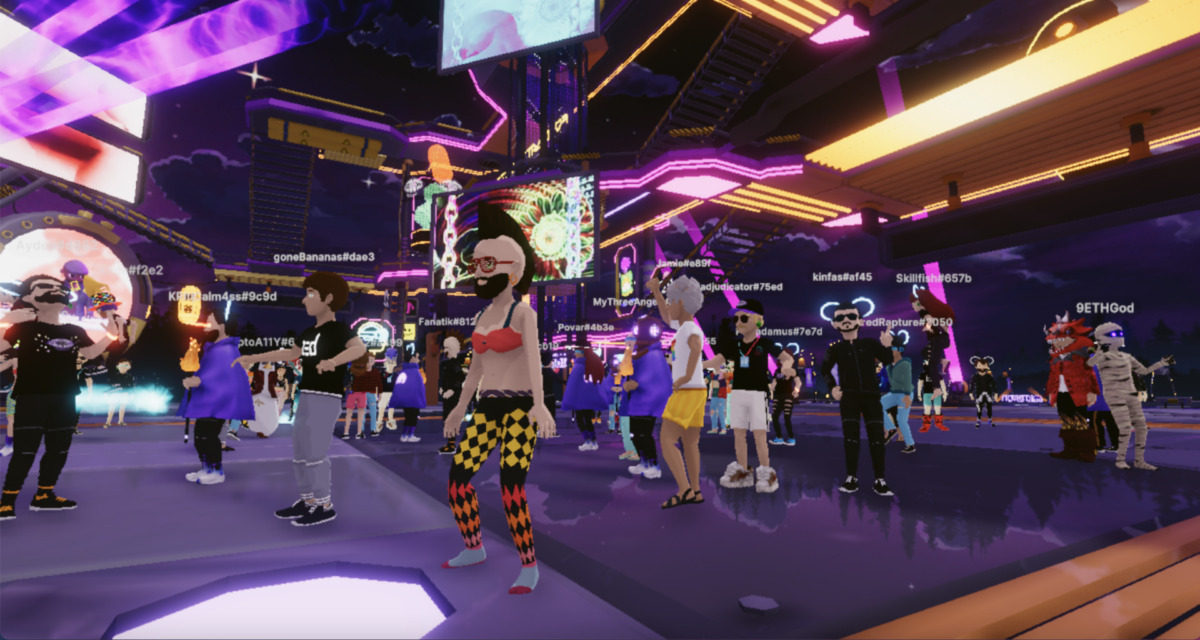
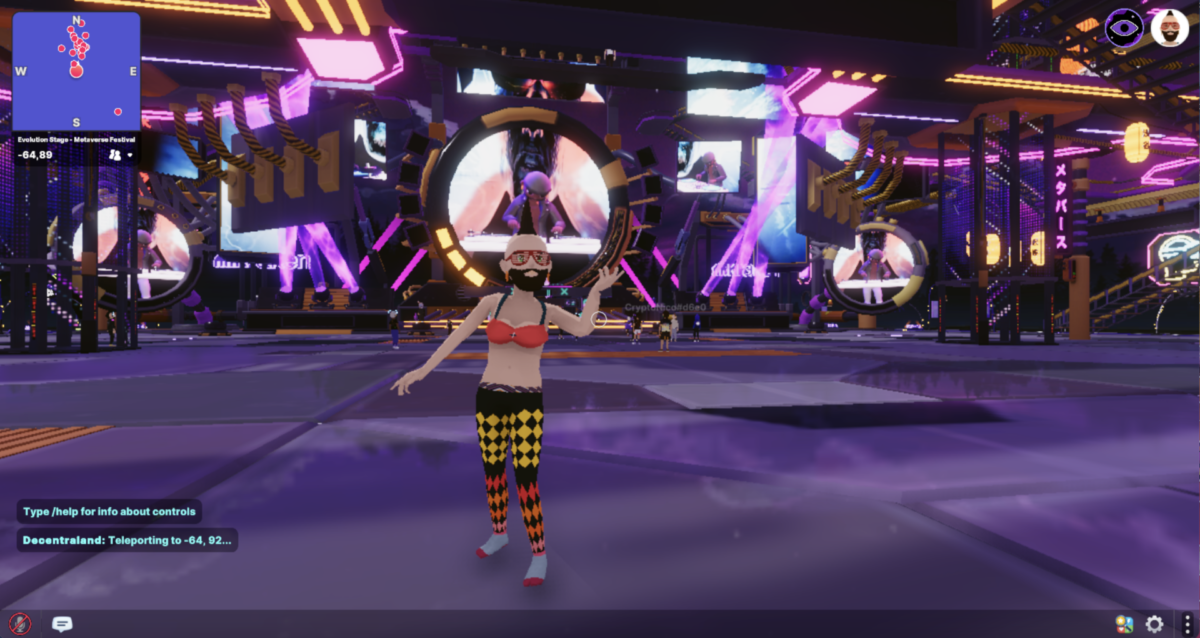
Whilst the dancing was a bit ‘wooden’ it was really fun and you could engage in voice chats with people you met (using your computer voice function), share emojis, or throw money and hearts at each other.
I did somehow manage to ‘pull’ someone I referred to as The Mexican (based on his hat alone) and had a virtual boogie with it/him/them to Cody Frost, who was fantastic and is now downloaded to my Spotify, before taking a stroll (aka awkward running that was inexplicably never in a straight line) around the festival site.
The digital land rush
The look and feel (rendered design and motion graphics) of the festival was superb. The site was split into stages, merchandise shops and food stalls and there were even wobbly portaloo cabins. But it wasn’t only about music, there was also a psychedelic sculpture trail, fairground rides and food vans.
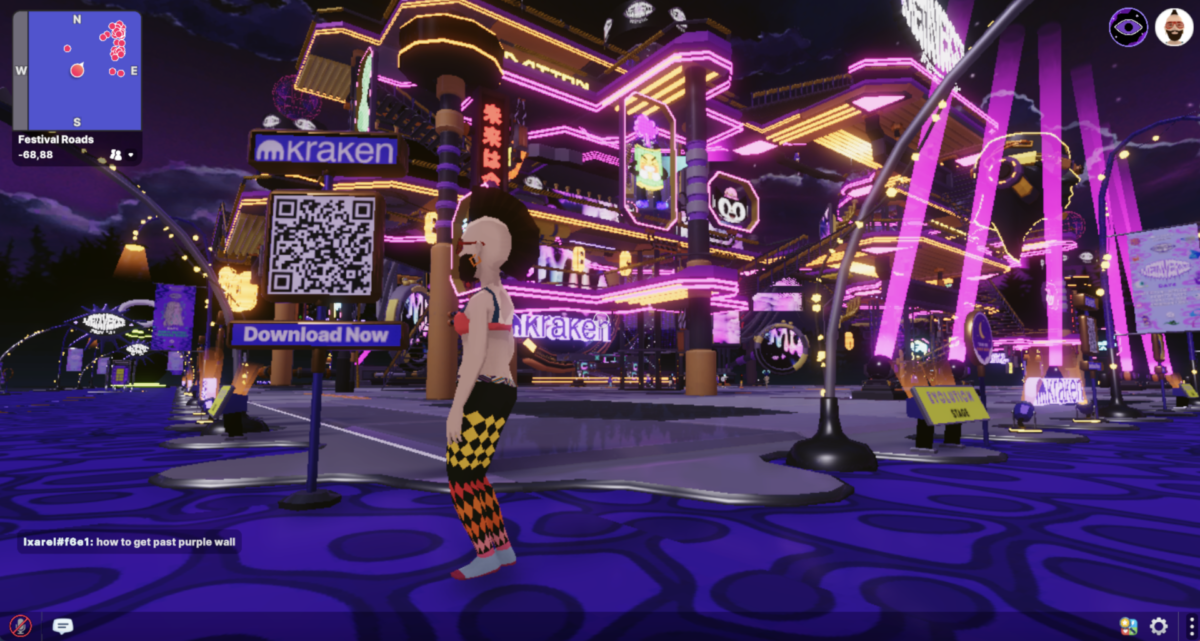
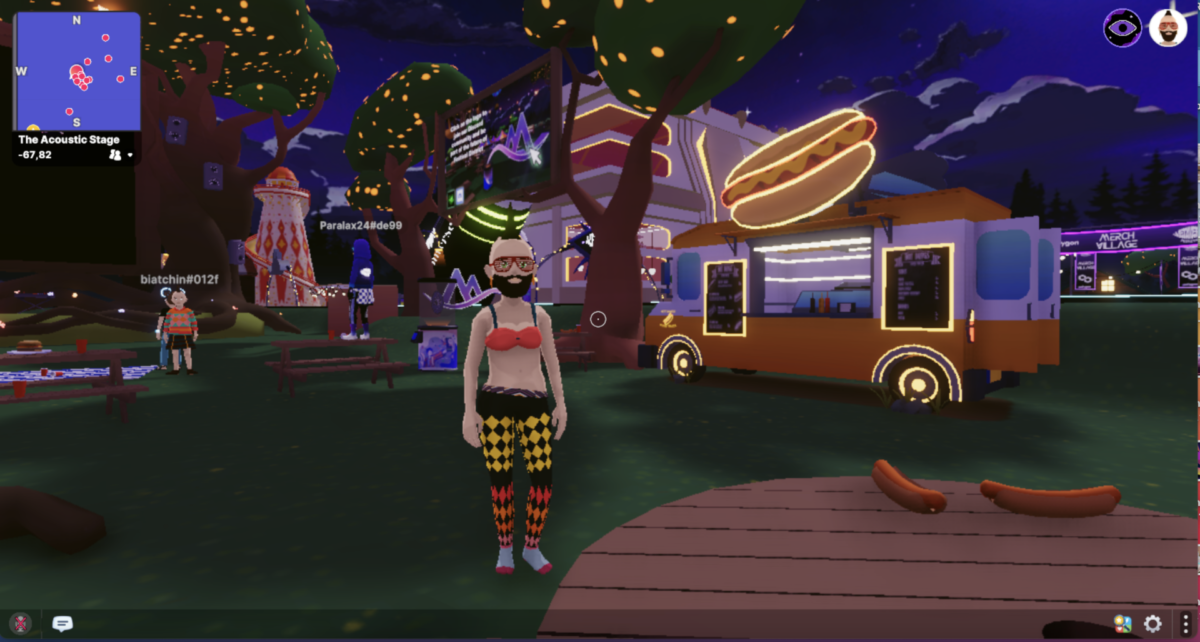
Decentraland is built on Ethereum cryptocurrency (MANA, is Decentraland’s currency) and the entire space is essentially a digital world split into parcel estates to ‘buy up’, develop and transact in. The landowners of these estates receive an NFT and then manage and control their digital space (much like a real property developer), including what content is on it, or published in it. And this is proving to be lucrative, especially if you snapped up land early on, or in the ‘exclusive / most desirable’ land areas. Some land that sold in Decentraland for $500 in early 2019, is now trading for over $7,860 today, and whilst the average NFT price from the last seven days was $9.4k, the Yoga Centre recently sold for $270,000.
So, it comes as no surprise that commercially, the festival was well thought through, with merch plugs everywhere.
Merch and commercial opportunities
To fully make the most of the festival, you needed a wallet and MANA currency, allowing you to buy your own username, merchandise and wearables to prove you had ‘been there’. I saw Metaverse Festival branded t-shirts and caps to buy, artist merchandise, crypto wallet promo banners and QR codes to scan and download as you went about the site. There was even an exclusive VIP tent and stage sponsored by Pernod Ricard gin brand Monkey47 gin.
From an artist perspective this was a brilliant way for music labels to showcase their talent, without the worries of Covid, or the effort and costs to stage and promote a physical show. Each of the artists had digital content on the stages representing them and digital billboards around the game. I also saw that the Deadmau5 content was streamed on Twitch and through third party social sites so it could be further promoted and shared outside of the game. The targeted exposure for these artists cannot be underestimated.
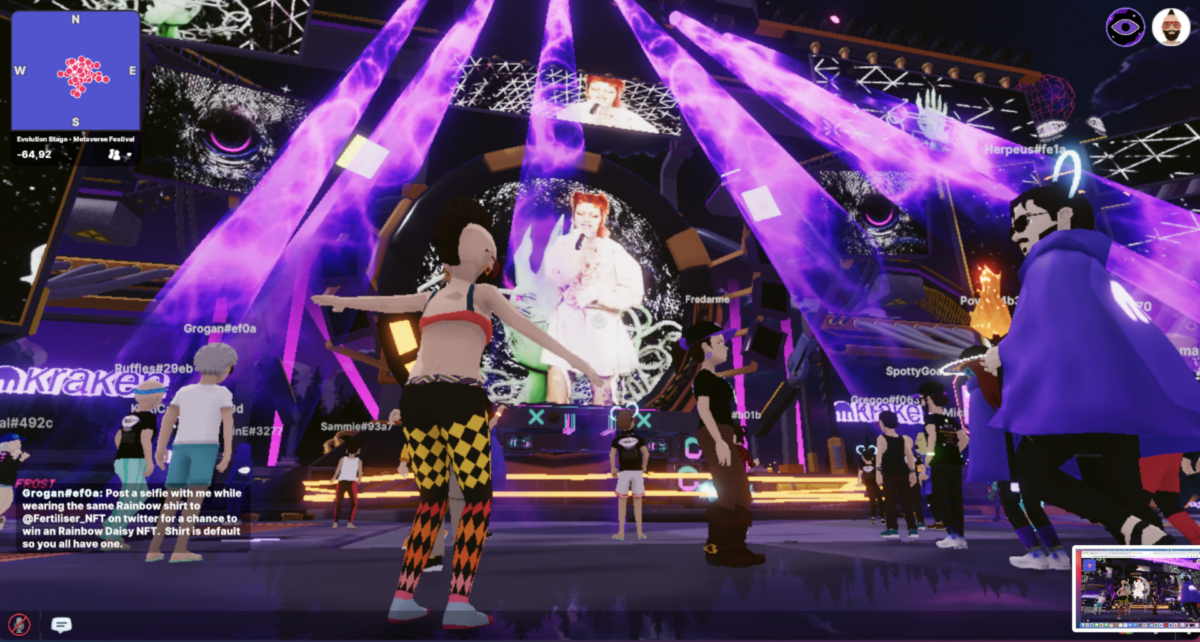
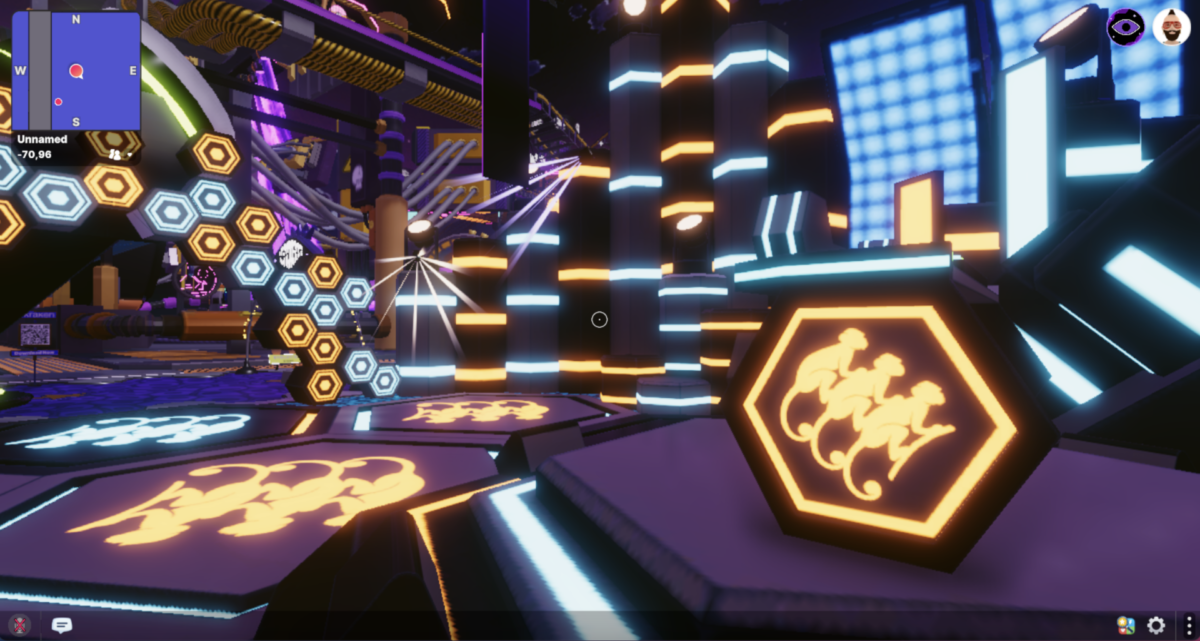
Before I knew it, I had spent almost two hours at the festival. How on earth did that happen? Annoyingly, I realised that Paris, the big draw of Sunday night, wasn’t on until 1.30am GMT, so I missed her, but caught up the next day to read all the complaints that she was only on for six minutes. Imagine doing that in real life!? But in virtual reality, for the digital native – six mins focused time is like 30 minutes in real life and it was probably just right.
I went to bed, feeling like I had actually gone out and had a really good time – even posting on Insta that ‘I was there’ in my stories. It made me wonder: is this how gamers get addicted and why didn’t I get The Mexican’s name and co-ordinates?