The rise of lockers and autonomous hybrid stores for security and shrink reduction was undeniable at EuroShop this year. Whilst not a sexy topic (I lied), it’s probably the number one issue keeping most retailers, QSRs and fast casuals awake at night right now.
Shoplifting offences rose by 20% year-on-year in 2025 in the UK, with over 530,000 offences reported in the 12 months to March 2025, costing UK retailers over £2.2 billion annually, with daily incidents of violence and abuse against staff exceeding 1,300.
Of course much of this happens in corner stores and mom and pop shops; convenience retailers spent a record £313m in crime prevention and detection measures in the UK in 2025, investing in areas like CCTV, security tagging, protective screens, facial recognition and AI store monitoring to keep their stock secure and their colleagues safe. But this is not just a UK issue: Germany, France and the US are all experiencing a similar crime wave.
With this in mind, I was interested to see the new technology, shop fittings and security solutions at Euroshop which were focused on deterring and preventing crime.
Lock it up
Locking up product was the number one solution I saw, helping to act as a deterrent from opportunistic ‘snatch and grab’ crimes, although systematic, high-volume theft orchestrated by organised crime groups is on the increase. According to the 2025 EU Serious and Organised Crime Threat Assessment, this evolution is driven by the exploitation of digital platforms, AI and an increasing willingness to use violence against retail staff.
The recent 2025 Crime Report by the Association of Convenience Stores (UK) reported that the top three products targeted by thieves are: 1). alcohol, 2). confectionery and 3). meat. 61% of retailers believe that anti-social behaviour in or around their store has increased over the past year, whilst 52% of retailers believe incidents involving organised crime groups have increased over the past year.
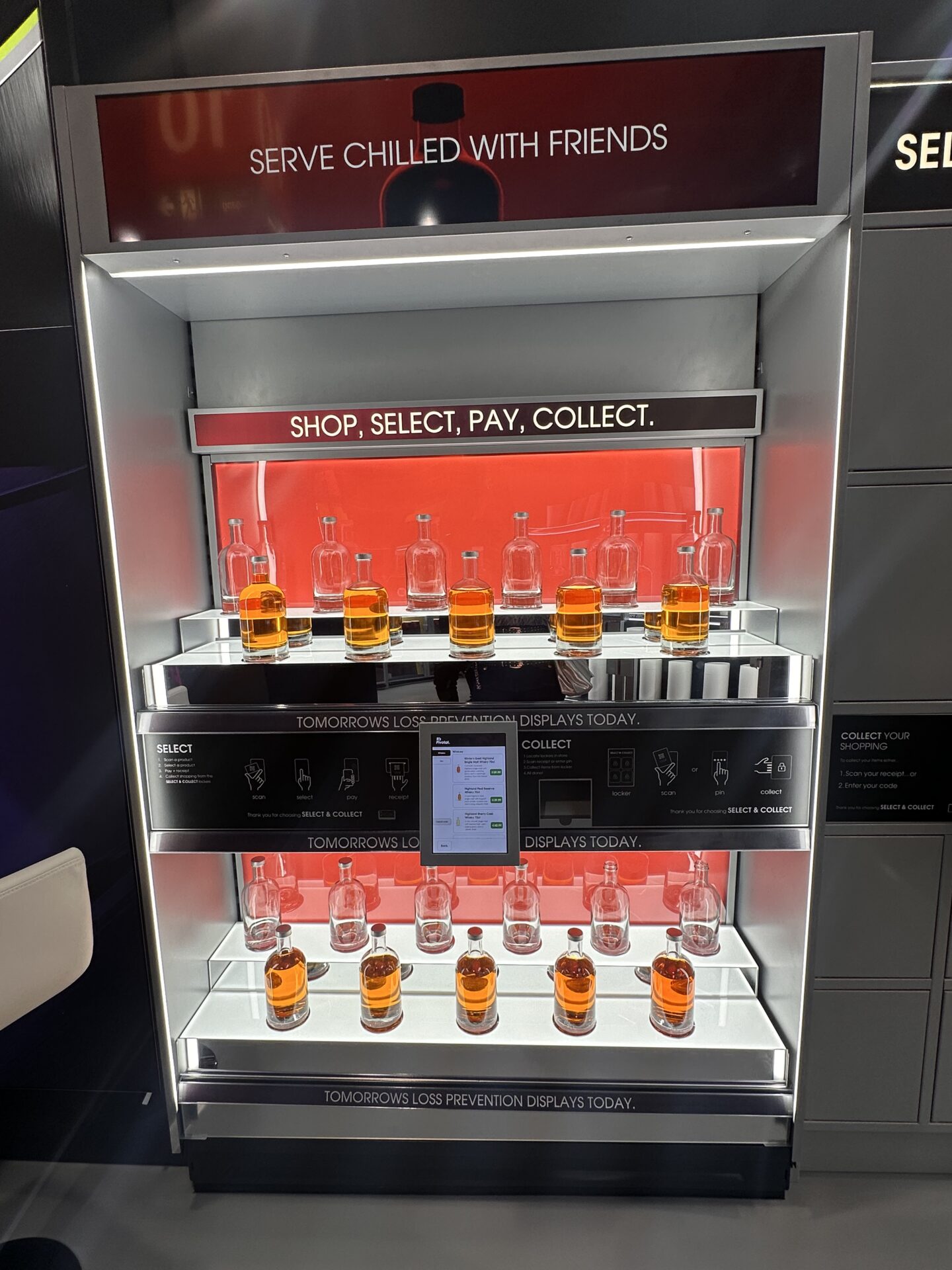
Pivotal introduced me to their locker system which is designed predominantly for use indoors, for high value stock like beers, wines and spirits.
They explained that their whiskey display had been designed to rethink the locker system and make it more appealing to shoppers. Customers can look at the whiskey, order on the touch screen system and make a payment which releases the locker door. It was interesting to see a combined use of digital displays (more like a website) and premium presentation with touch screen payment and age identification.
The company also thinks this could work for small electronics or perfumes and has developed a pick up display that automatically adjusts the information as customers engage with product. Once you decide on your product and pay via the touch screen, a smaller locker in a pull out drawer opens for collection.
Flip to reveal
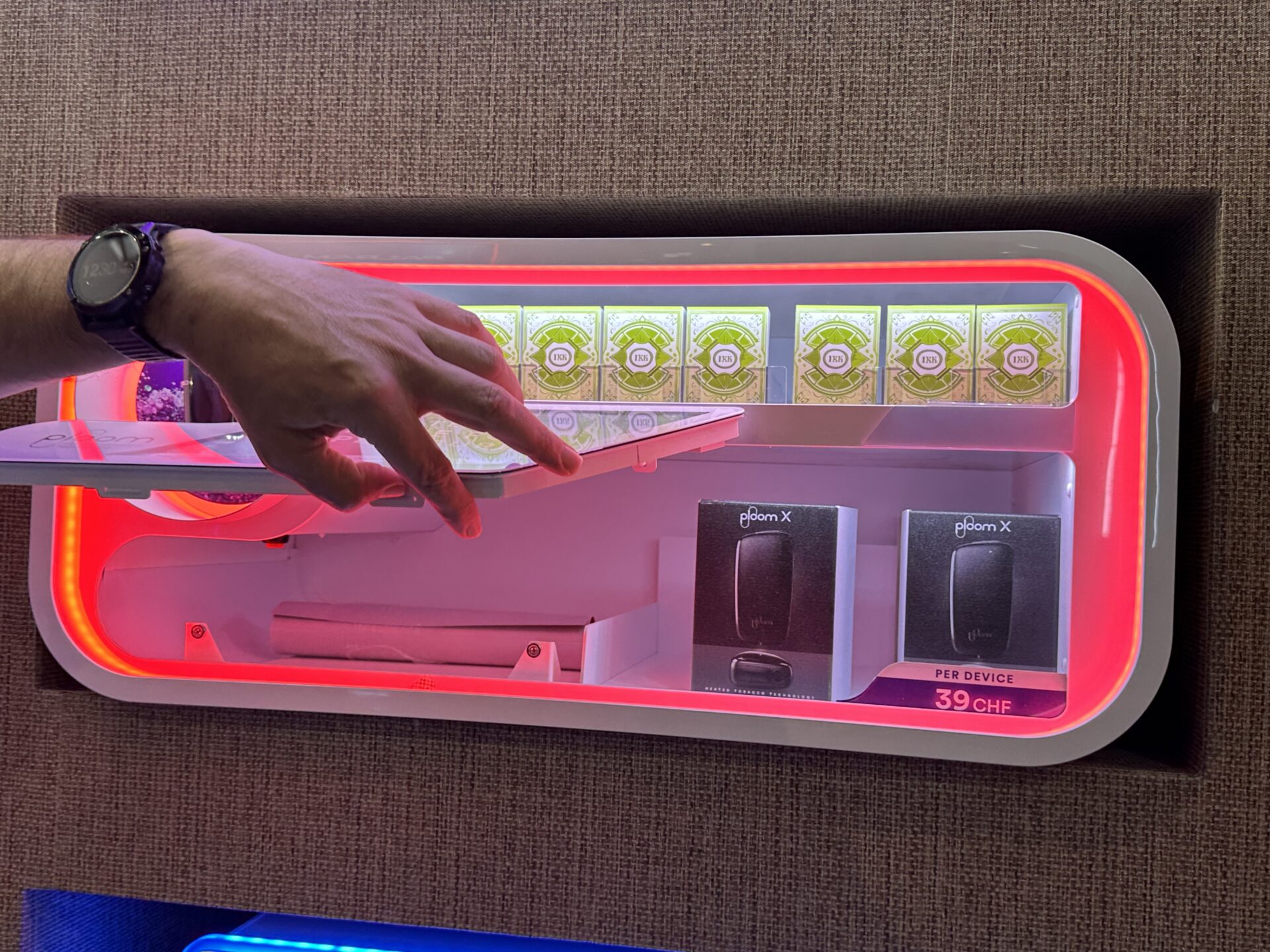
Stores full of lockers and locked cabinets is a distinctly worrying retail future that removes the exciting ‘discover and hunt’ element from physical retail. It was interesting to see how branded digital displays and flip and reveal panels at Palram could help to balance the the security needs of retail, with brands’ communication.
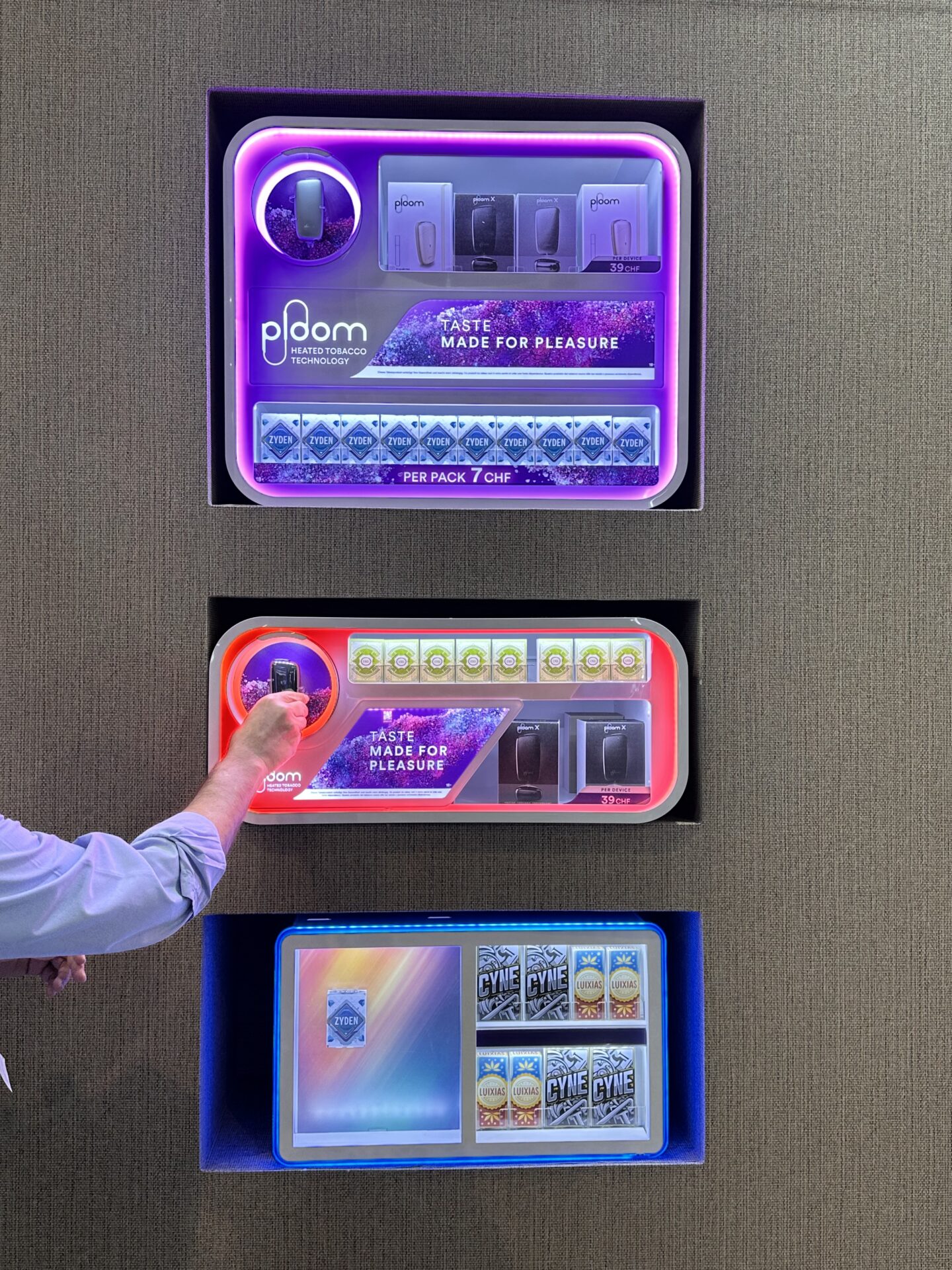
Their solutions included cabinets and vending kiosks for tobacco and vapes featuring light box or led panels. Dark market switching and flipping shelving hid or revealed sections. Some of these panels also concealed under the counter merchandise. All could be locked, or simply positioned out of thieves reach behind counters.
Age verification
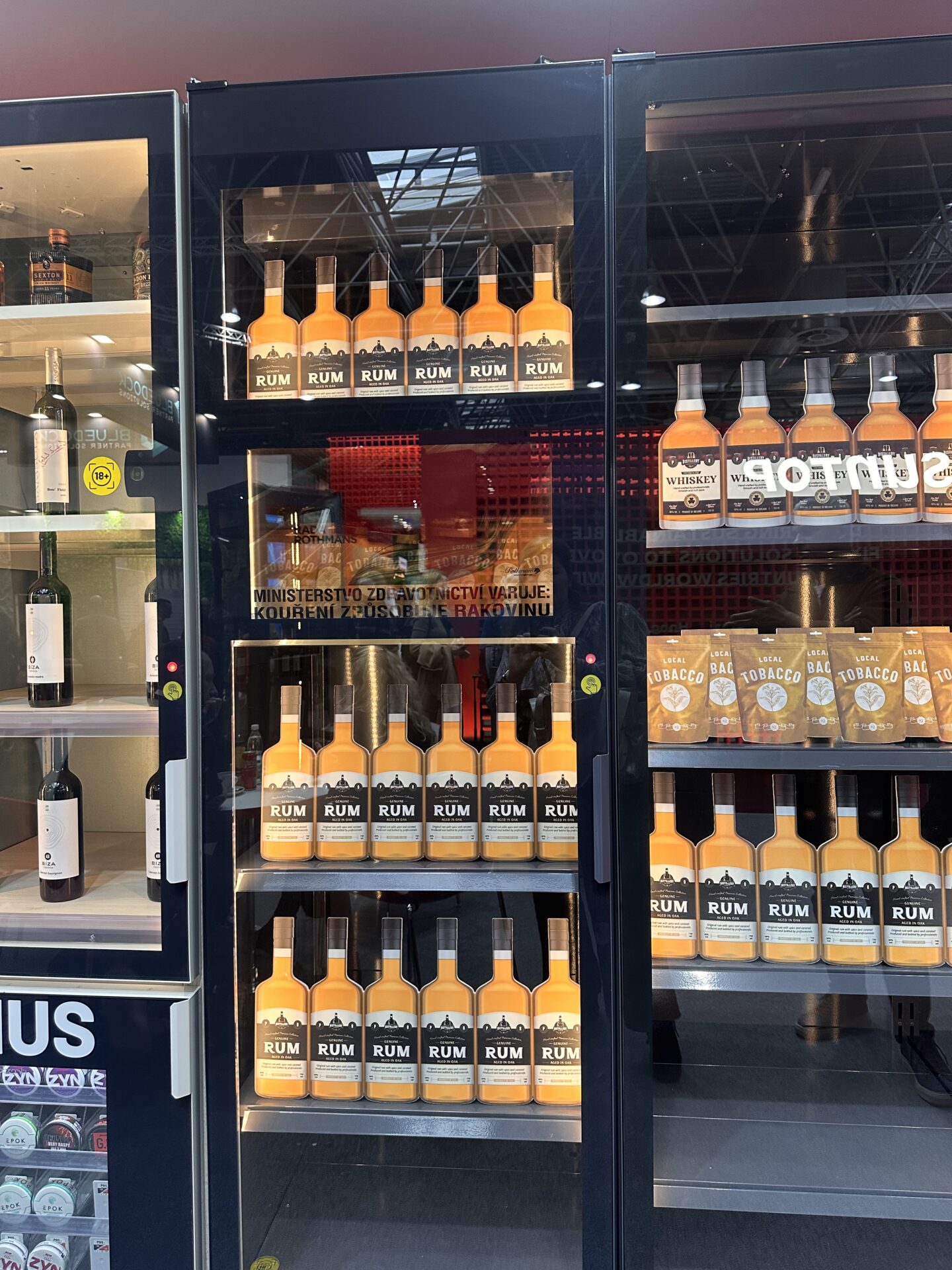
Along similar lines were glass cabinets with locks released with ID codes, QR codes or by staff activation. Tobacco and alcohol age verification is key for these categories, but complex, with different regulations in different markets. I watched a demo that utilised AI-driven biometric age detection with a camera built into the vending unit. This combines with a second level alert to staff who could then double check in person and release the cabinet via remote control.
Auto unlock and checkout
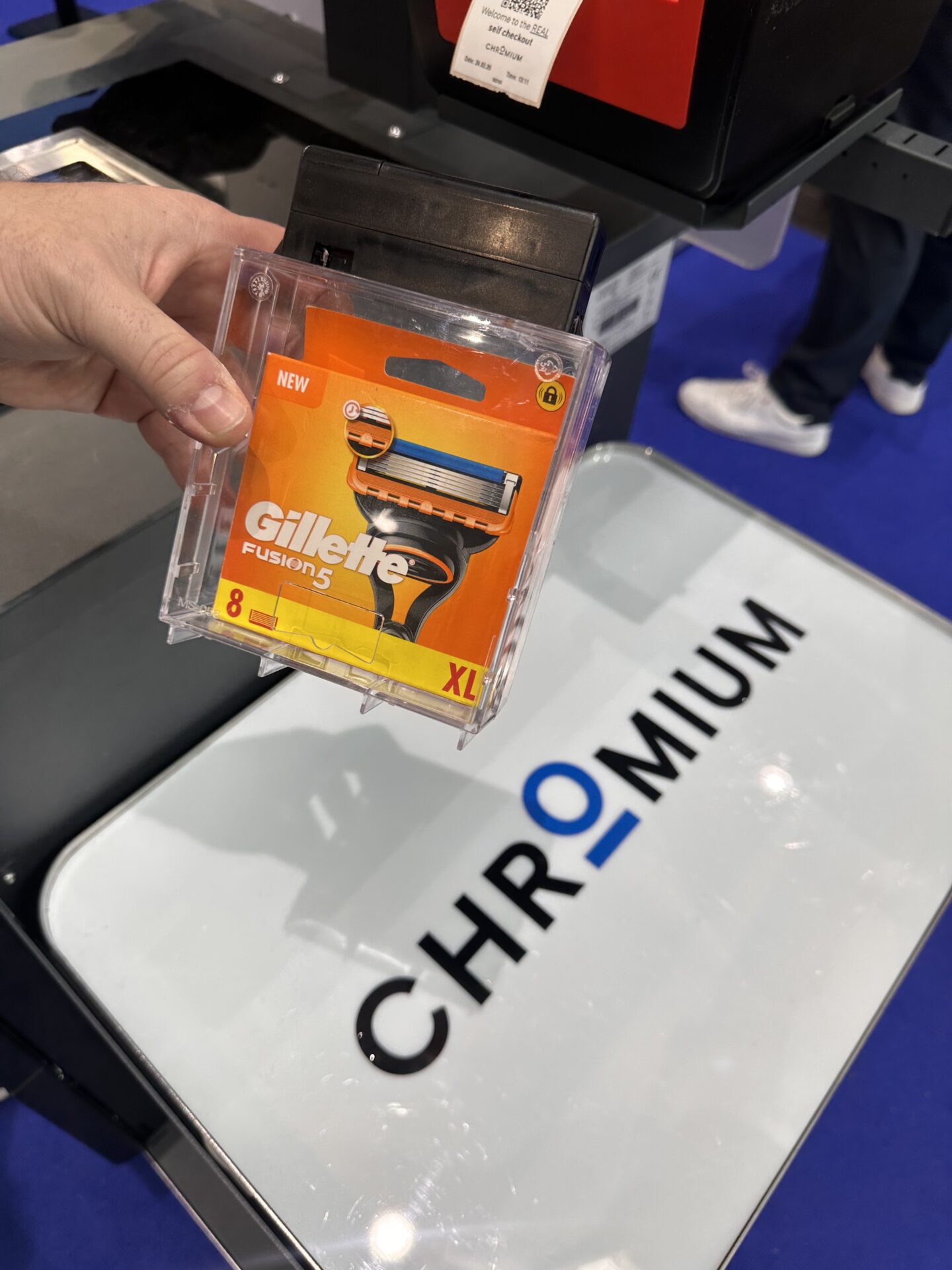
Chromium by STC Retail showcased an anti-theft hard clam shell system. Perfect for smaller items like razor blades or perfumes, these cases have security tags on them, locking the whole product inside. When shoppers want to pay, they take their product to the counter. Only when a payment is authorised does the box automatically open. Designed for self-serve scenarios, Chromium anti-theft boxes and guards come in three security levels: standard, super and hyper – ranging from basic to high-level protection.
Self check out carts
This clip-on smart cart device by Shopreme and Honeywell allows retailers with existing carts to upgrade them and enable self checkout with AI-driven security.
Cameras at the front scan and identify the product. At the back of the unit computer vision verifies the correct product is added to the cart and also spots and ‘suspicious a activity’. If it does spot this, an alert is sent to staff (via colour codes on the device) to attend the shopper and assess if there is a problem. For shoppers it features media and promos, directions via beacons on smart shelves and a self checkout.
Hybrid day to night stores
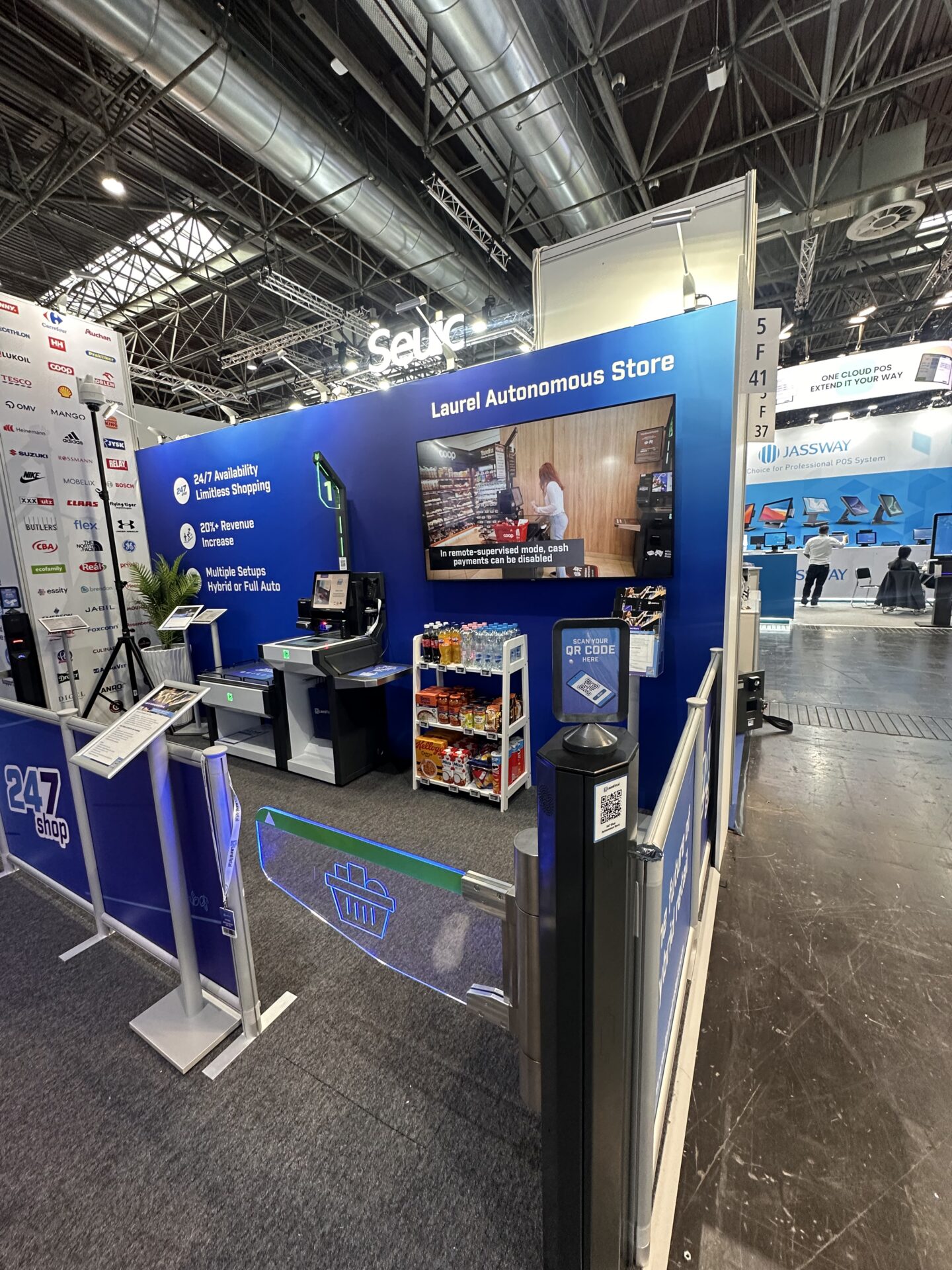
Laurel Retail (part of STC Retail) showed me a hybrid store that transitioned from staff run in the day, to auto checkout at night, with additional security measures that lock you in the store if you don’t pay.
They also had very interesting reporting metrics behind this system (thanks for the detailed demo Alejandro!). I was told that enabling the automatic stores in areas where shoppers are active at night (eg. in urban areas or student areas) contributed incremental sales of 15-20% in their tests.
Final thoughts
It was clear from Euroshop that petty theft and organised crime are not only eating into (and sometimes entirely eradicating profits) but are also becoming increasingly prevalent and dangerous for staff. And this is a problem not only affecting retail stores, but hospitality, QSR and casual dining.
In London, I have personally witnessed teens scooping up entire shelves of merchandise from Greggs and Starbucks – both in broad daylight, at lunch time and after work peak times. Staff no longer want to intervene knowing that they might get hurt and that police will not arrive (at all, or in time).
Security guards know the £200 Rule (UK: A 2014 law change classified theft of goods valued under £200 as a “summary offence”, ie: a minor, low-value offence) and so do not intervene either – making their role redundant. This rule has sadly encouraged a perception among offenders that they can “steal with impunity” – setting a dangerous behavioural trend. In the crimes I personally witnessed, nobody even bothered to hide it, or even run – knowing that there would be no consequences. Whilst I know the government is looking to overturn this, once behaviours are established in society, they are extremely difficult to change again – forcing retailers and hospitality outlets to take matters into their own hands.