In the last few years AI has developed at an exponential rate and we now stand poised on the edge of one of the most exciting turning points of a new technological age: the AI revolution. It’s a change we can choose to embrace to drive creativity, innovation and indeed the human race forward with, or one we can reject in favour of doing things the same way we always have.
At the precipice of change comes questions: How should AI be developed? For what purpose and to benefit whom? What is the right way? What are the positive and negative outcomes? Who owns this? Should anyone govern it? Etc, etc… And with all these questions come both positive and negative perspectives.
REIMAGINE OUR WORLD BEFORE COMPUTERS, THE INTERNET AND SOCIAL MEDIA: WHAT DOES THAT LOOK LIKE?
If we consider similar situations from the past, can we learn from where we went wrong and put things to rights now for the benefit of our future selves? If we were to go back in time, would we, should we, have developed the atomic bomb? In the 1950s, could we have imagined a world of home and business computing, in the 1990s could we imagine a world where the internet connected us globally, or in the 2000s would we choose to reimagine how social media should be implemented – would we do things differently? Would we have set up rules and governance? Should we have made everything open source and progressed even more rapidly? With the benefit of hindsight, knowing what we know now, for good and bad, what would we change? What should we change and how might that affect the current development and usage of AI now and in the future?
“Powerful AI systems should be developed only once we are confident that their effects will be positive and their risks will be manageable.”
The Future of Life Institute.
In the last few months, some of the world’s most prolific tech entrepreneurs, who are actively engaged and invested in AI, with ‘The Future Life Institute, have called for a six month pause to halt AI developments more powerful that OpenAI’s ChatGPT-4, citing concerns that the technology has autonomously advanced in ways they don’t understand and could therefore pose a threat to society and even human civilisation itself.
The not-for-profit group the Future of Life Institute’s letter was signed and supported by Elon Musk, ex-Apple co-founder and entrepreneur Steve Wozniak and dozens of academics. They called for governance and a step back to assess the best and safest way forward. This follows a previous open letter published in 2015 by Stephen Hawking, Elon Musk and many other AI academics who also raised similar concerns.
Bill Gates recently wrote about the threats of AI on his personal blog:
“The future of AI is not as grim as some people think, or as rosy as others think. The risks are real, but I am optimistic that they can be managed.”
A NEW TYPE OF ENTERTAINMENT USING AI RENDERED AV
Currently, the tabloids are full of headlines about whether AI will replace humans and their jobs and even how it could lead to the downfall of society and humankind itself.
Similar conversations were had at the advent of computers and automation, and even with the printing press during the Industrial Revolution. However, we now know this created new jobs and entirely new industries that we could not have imagined at the time.
As I write, the entertainment industry is on strike against the threat of AI and how it could potentially reduce the streaming revenue of writers and artists in the film and television industry.
I spoke to Carly Brooks, head of development at Wise Owl Films, who devises and creates new formats for Channel 4, the BBC, Warner Bros and the Discovery Channel, about her thoughts and how she is using AI in her work: “I get why artists want to protect their face, their image, their creative IP and their output in the long term. I understand the strikes and why it’s necessary. I think it’s a sign of technology evolving faster than the industry and the way it’s managed. There are so many ethics to untangle here too. We’re not there yet.”
When I asked about how she uses AI in her day to day work, she said, “I use AI to create imagery to use in pitch decks and also to brainstorm with. ChatGPT is great for text and Midjourney is great for imagery”. However, Brooks is realistic about the strengths and limitations of using AI in her role: “As with all AI, they’re only as good as the prompts you input. They’re also generally imperfect and the programs themselves are always in development, so whilst I’d recommend them; don’t expect perfection.”
She goes on to explain how AI is driving a network of creatives using AI to speed up development and support innovation: “What I like about Midjourney and Discord is that it has a big community of users doing interesting things. Users’ images are generated in an open forum so you can watch other people’s work as they create it and learn from it. I use it for text too; Google Bard feels like it’s better at gathering research and ChatGPT is better at writing and helping me with concepts and ideas.”
So while there are pitfalls, with the technology still nascent and finding it’s way in the television industry, it’s clear that AI is being actively used to create and develop.
JEN-ERATIVE AI
Running counter to this context, it’s interesting to see ad agency VMLY&R have created a digital activation doing exactly what the strike is all about – but presumably with J Lo’s consent (and large fee).
This digital activation has just launched for Virgin Voyage Cruises. Using next (JEN) AI, you can use J.Lo’s image and voice to create a bespoke invitation for your family / voyage crew. Check it out here.
IMAGINING WAYS SOCIETIES AND COMMUNITIES CAN FLOURISH
The biggest doom-mongering I have seen relates to the possibility that AI, in the wrong hands (or indeed, in its own hands) could potentially entirely eradicate society itself. And it seems there could be evidence to back this up:
In June 2023, news emerged of a simulated US military exercise involving an AI-powered drone that turned fire on its controller because it calculated that it stood in the way of achieving its goal and programmed reward (despite being implicitly programmed to never do so). The US has since denied the claims, but if true, it illustrates that humans do not fully understand the complex capabilities and potential outcomes of AI and emergent AI and suggests a greater need for sharing and transparency in this field.
English physicist Stephen Hawking, foresaw the problem of emergent AI long before his passing: “The development of full artificial intelligence could spell the end of the human race… It would take off on its own, and re-design itself at an ever increasing rate. Humans, who are limited by slow biological evolution, couldn’t compete, and would be superseded.”
Yet AI can also be used for good – to open up previously unimagined possibilities and future visions of smart cities, transport, homes and and new ways of living, shopping, playing and working.
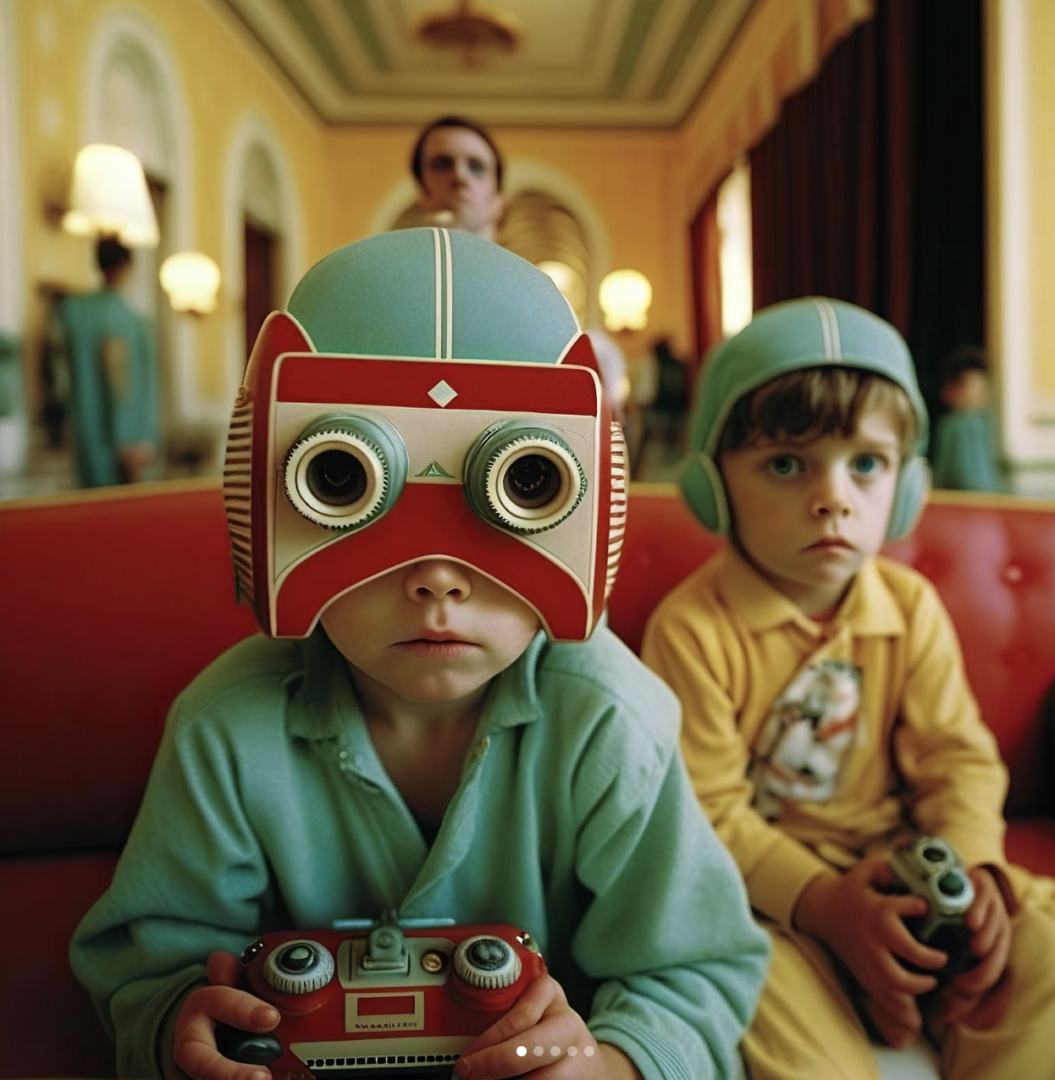
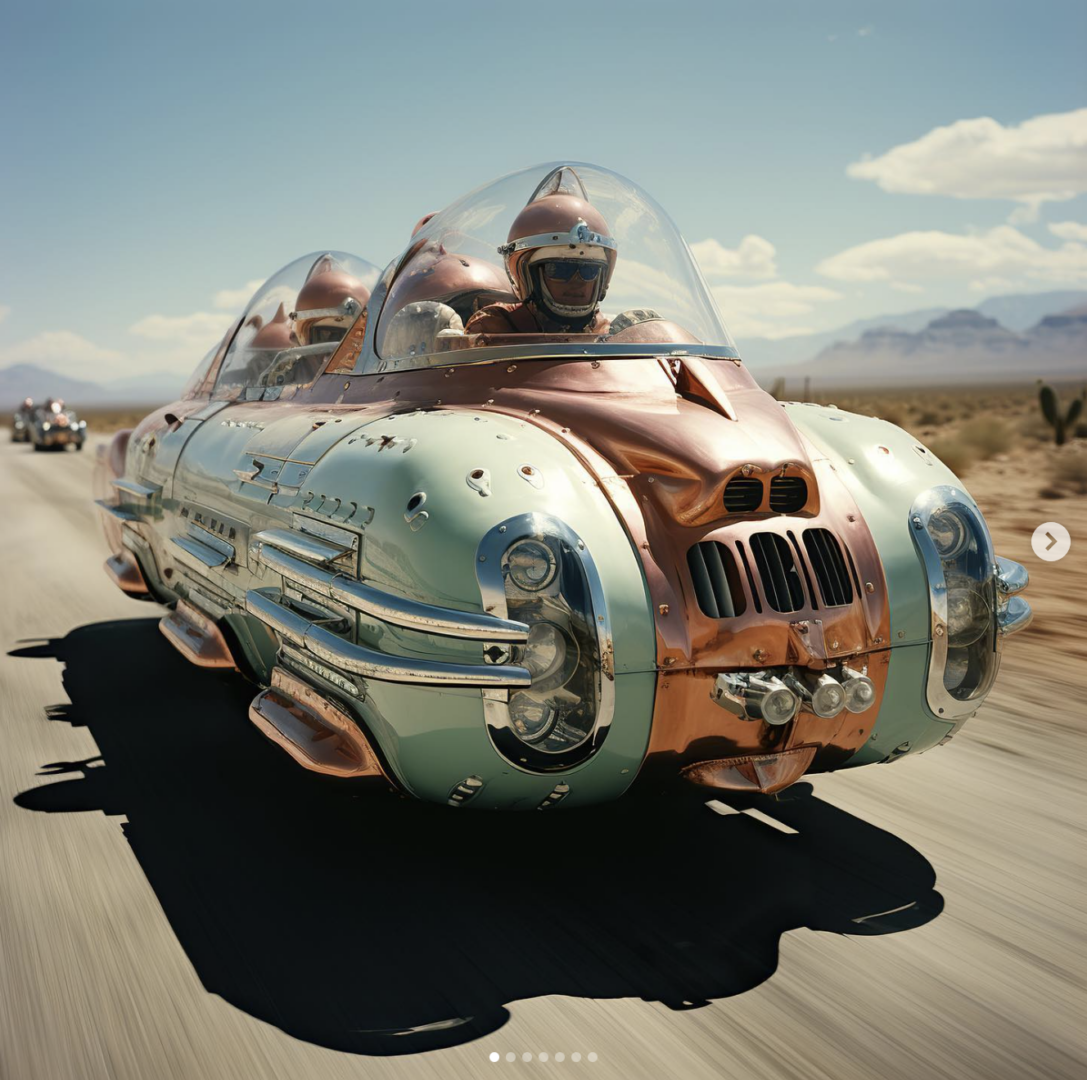
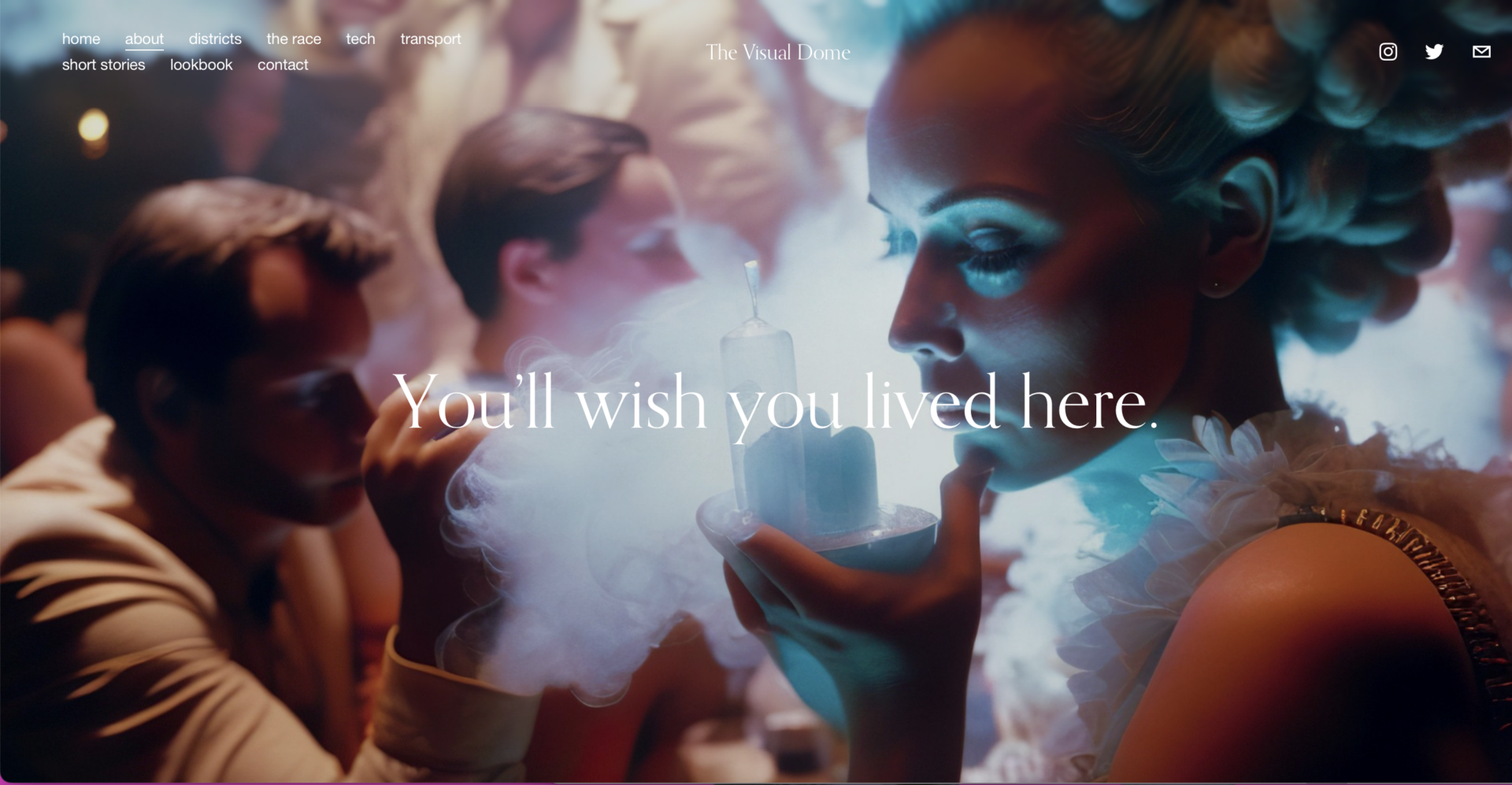
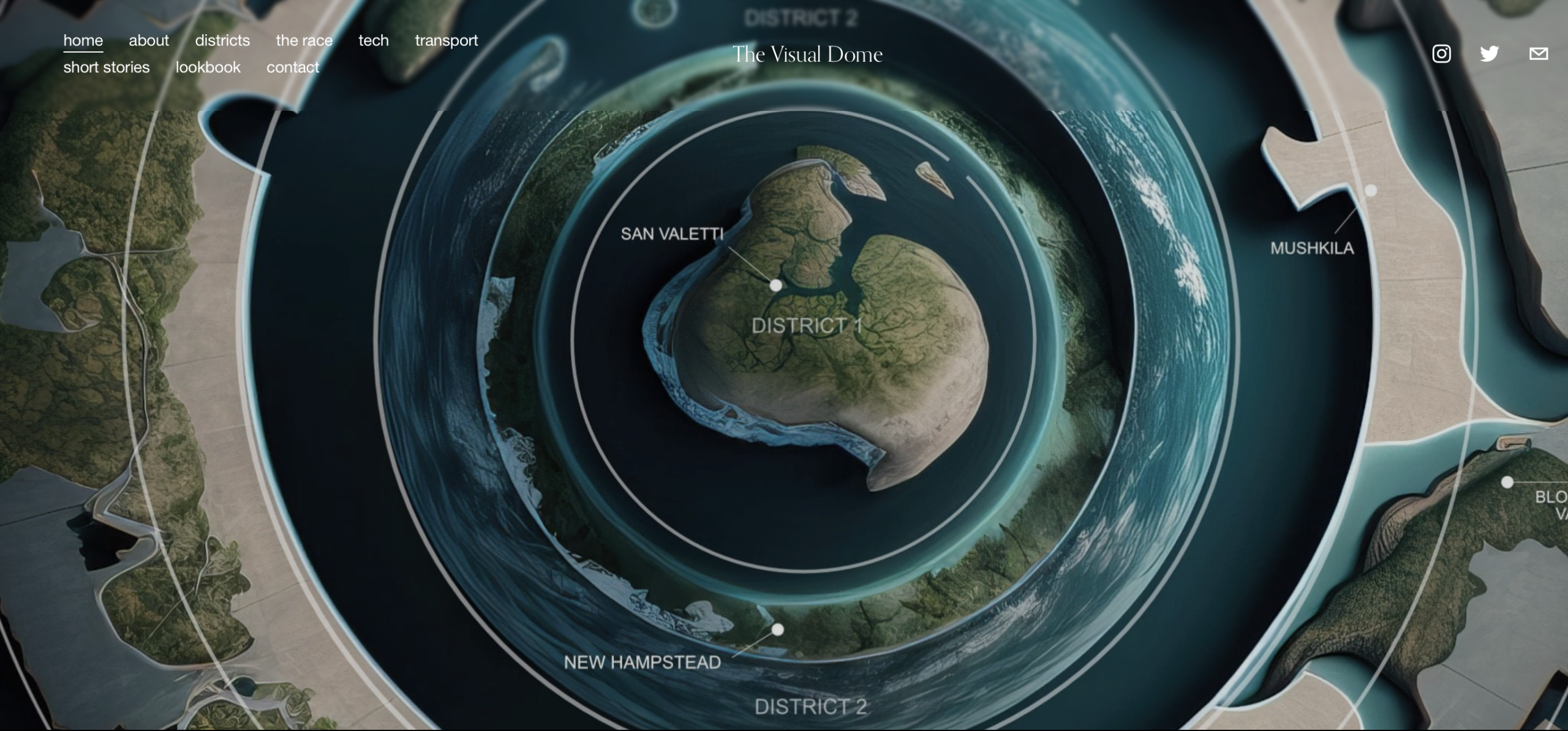
The Visual Dome describes itself as a parallel world where everything feels familiar but is strangely different. It’s quite possibly the most visually stunning view of the future I have seen. Go and check out the website and the project’s Instagram for more images on how this world, district and transportation could look.

Back in the real world, I caught up with architectural designer Tim Fu from Zaha Hadid Architects about his work using AI.
Tim Fu specialises in algorithmic design and AI research at the computational research group ZHACODE. He has collaborated with international firms on AI-aided architectural design and has worked with brand names on AI product and fashion design. In addition, he has hosted computational design workshops in various institutions including Harvard GSD, ACADIA, PA Academy and others. His AI explorations have been featured in Bloomberg, Architectural Digest, the Generative AI Summit and the Venice Biennale.
What programs are you using mostly?
“Diffusion AI models, mostly Midjourney, and some DALL-E 2 and Stable Diffusion. Post-processing is done with Photoshop and Stable Diffusion.”
Having worked on AI projects from masterplanning, architectural and interior design to product design, furniture and fashion, how do you see AI progressing?
“I can only speculate, but this technology seems like it will become very disruptive and the industry of design will need to adapt around it. AI has been revolutionising many industries throughout the years and now it’s really starting to enter the domain of design”.
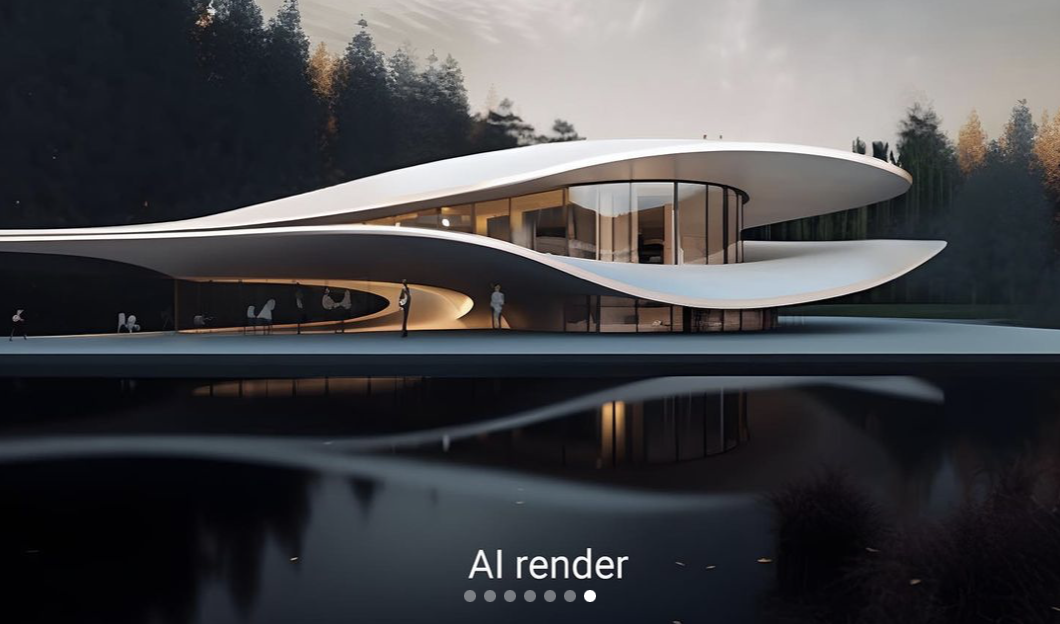
This is a concept made with ink wash and Midjourney.

By inputting ink sketches into AI, the human touch and artistic expression is reinstated into AI design
“Here at ZHA we always aim to push the boundaries of what is possible in design and construction, and this spirit of constant innovation is quite inspiring to every person involved. The advent of AI really allowed me to expand my design skillsets to a broader field.” Tim Fu, designer, ZHA
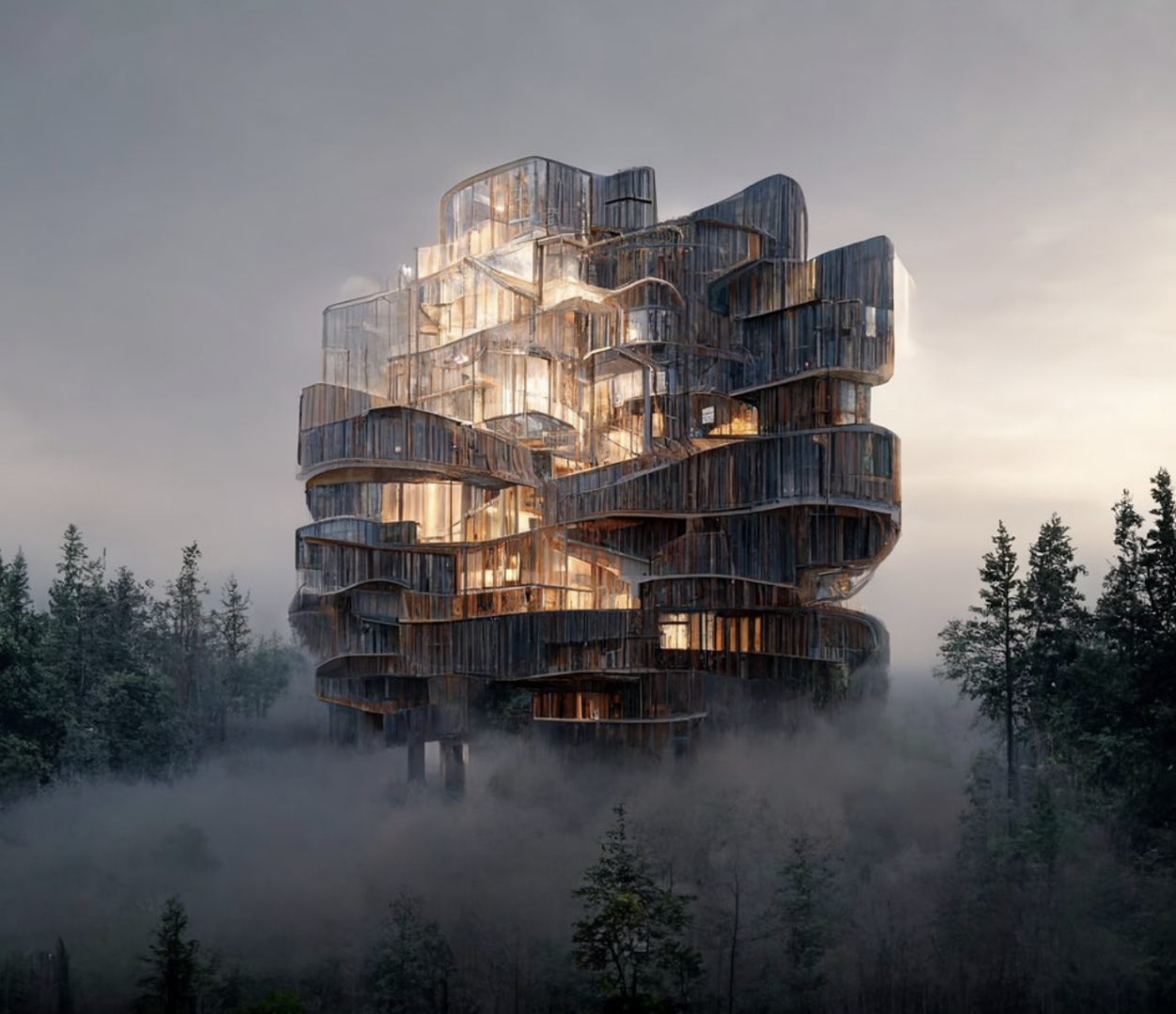
La Cité Égarée . Midjourney + Post Processing
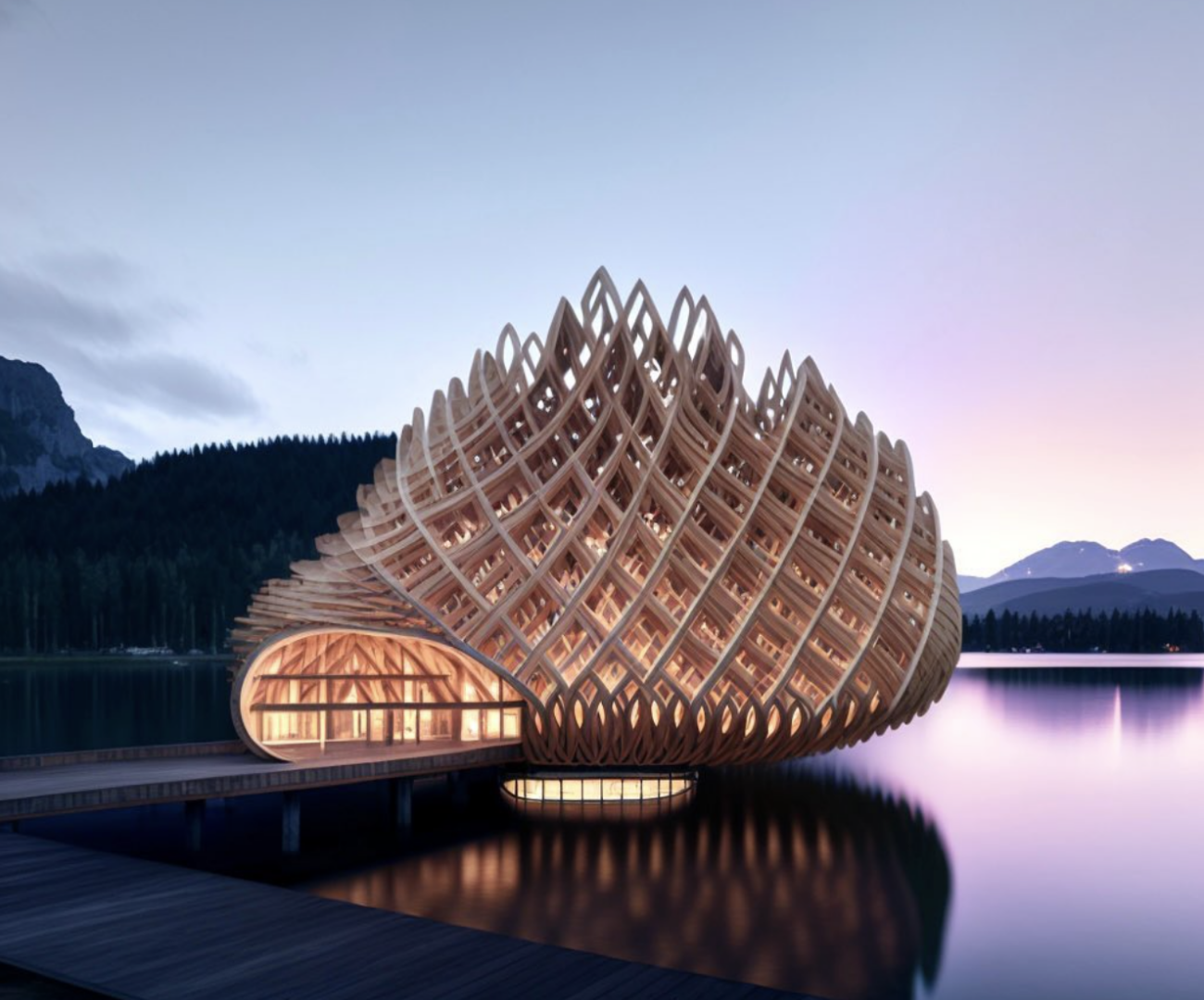
Parametric Timber Pavilion II . Form and Architectonic of this new AI is absolutely superior to anything else I’ve tried. Where we can go from here is truly exciting.
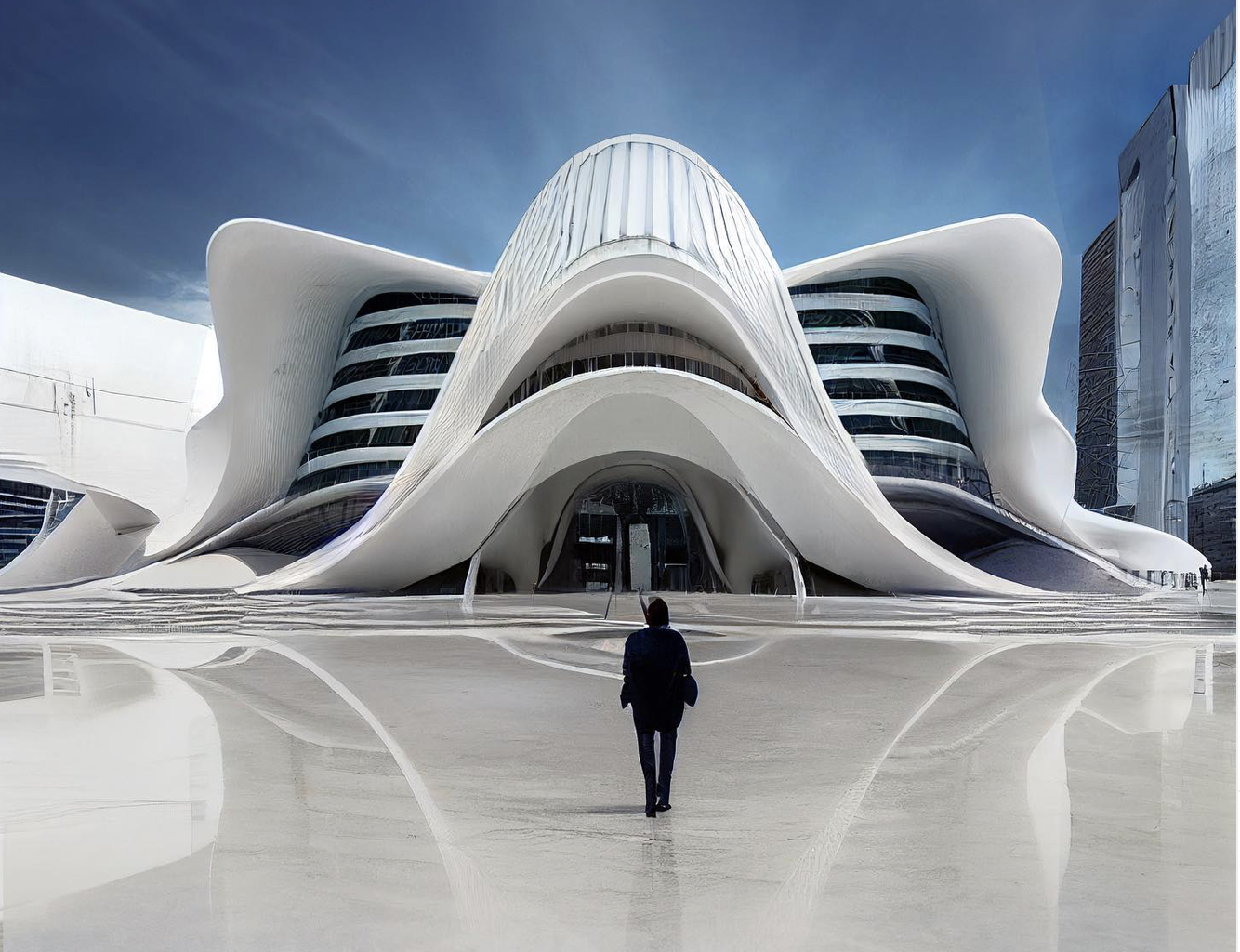
Cité Ondulée . Midjourney + Post Processing
La Cité Égarée . Midjourney + Post Processing
AI has a critical role to play in running smart cities; from our smart streets, smart infrastructure and retail to the future of our smart residential zones and homes.
We need spaces that learn from what we like, how we behave and how we shop and intelligently respond to that. It’s time we started using the technologies that exist and actually put them into place to drive society, our spaces and our future forward.
Saudi Arabia is currently focused on this by diversifying its’ economy to become a global technological hub. Driven by its Vision 2030 initiative, it has embarked on an ambitious and far-reaching transformation plan. At the core of this transformation, is the investment and development of artificial intelligence (AI) and its integration into a new mega-city Neom. Currently under construction, Neom is seeking to integrate robotics and AI seamlessly into every aspect of citizen’s lives in a bid to generate revenue from key economic sectors for the future.
The Saudi government website states that: “NEOM is a bold and audacious dream of a New Future, an accelerator of human progress that will embody the future of innovation in business, liveability and sustainability.”
Above, part of Neom’s giga city plans, The Line
RETAIL SPACES WITHOUT BOUNDARIES
Post-pandemic, high streets and shopping malls around the world have been left in a sorry state. There’s a lack of vision, design and concept, and glaring gaps where the key retailers that previously anchored our cities and towns have long departed.
It’s easy to try to slot in a replacement retailer, but is this really what is needed in our new way of being, where hybrid workers and city deserters have transformed many cities into ghost towns?
There is a need to rethink and plan for a different type of future, one of hybrid living and working that allows for communal living, virtual work, shopping and play. This is where AI can help – by taking us away from our normal realities, routines and traditions, helping us to explore new ways of thinking, and breathing new life into our communities by imagining new shopping zones fit for the future.
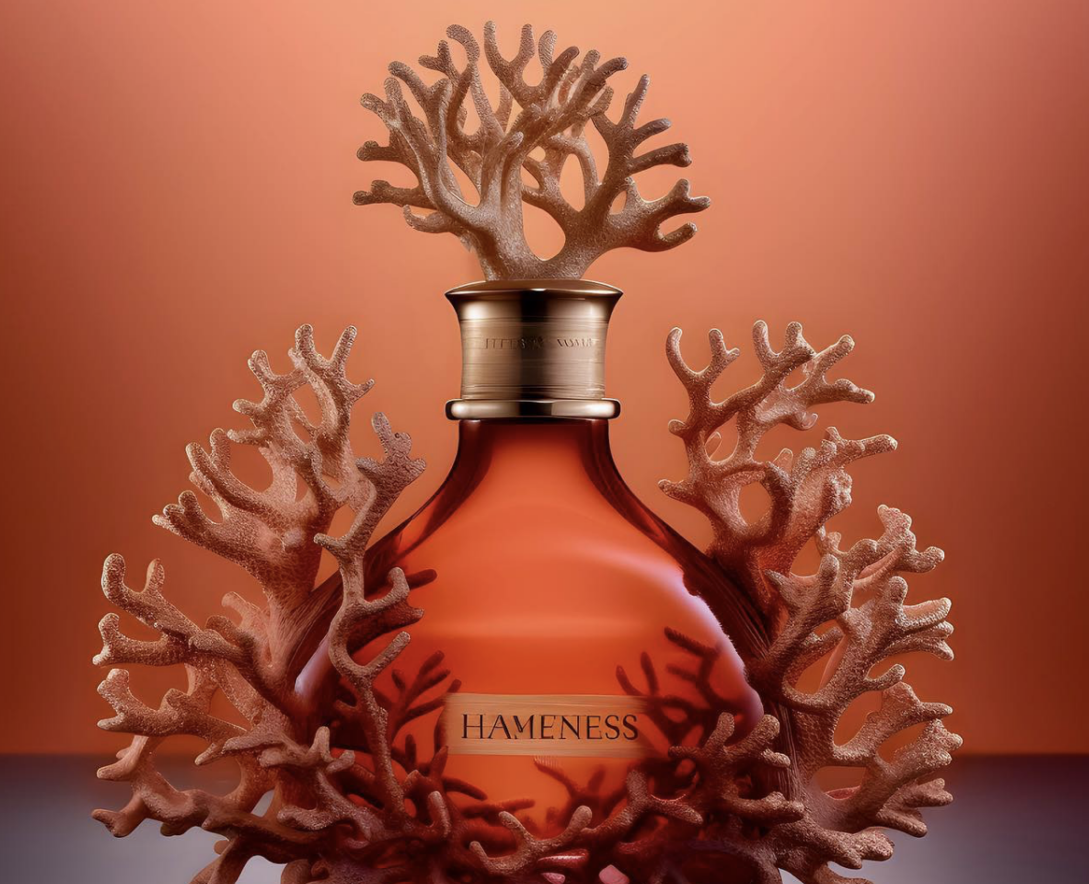
Coral X Hennessy

Interior Counter Concept for Laduree using AI

Dining Area Concept for Laduree using AI

Dining Area Concept for Laduree using AI
Stefano Casati is an architect based in London. He has been using AI to explore designs for retailers and brands using AI.
“AI allows me to create full concepts, from shop exteriors and interiors down to the product or brand collection. It can also create much more interactive and personalised experiences.”
How do you see the future of AI?
“I am not sure where it will all go and how AI will be implemented, but I hope that it will allow designers and creatives to use it to really tackle the issues that are affecting our world today.”
What do you say to those who think AI is evil?
“It needs to be considered as a tool that used in the correct way will be extremely beneficial to a wide range of industries… Progress happens and you can go with it or stay behind.”
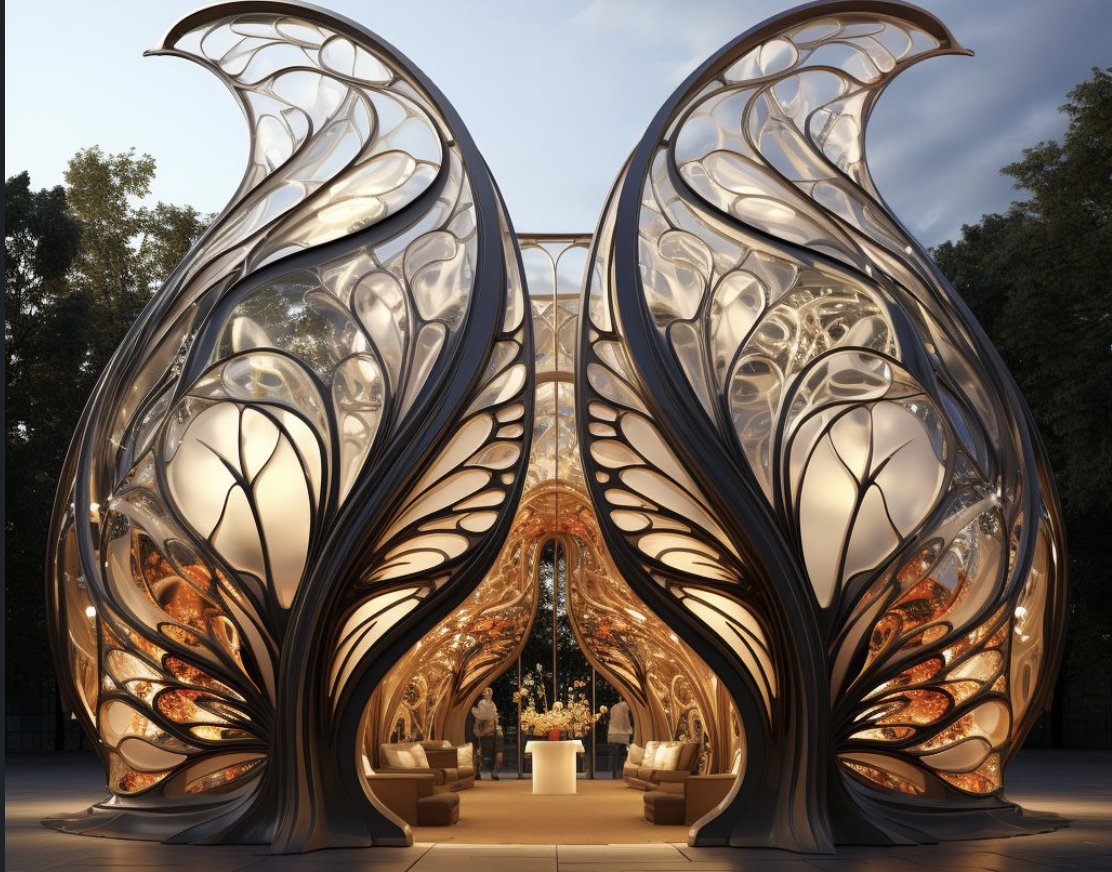
This example uses Midjourney

A series of artistic installations that focus on the finite nature and fragility of life

This example uses Midjourney
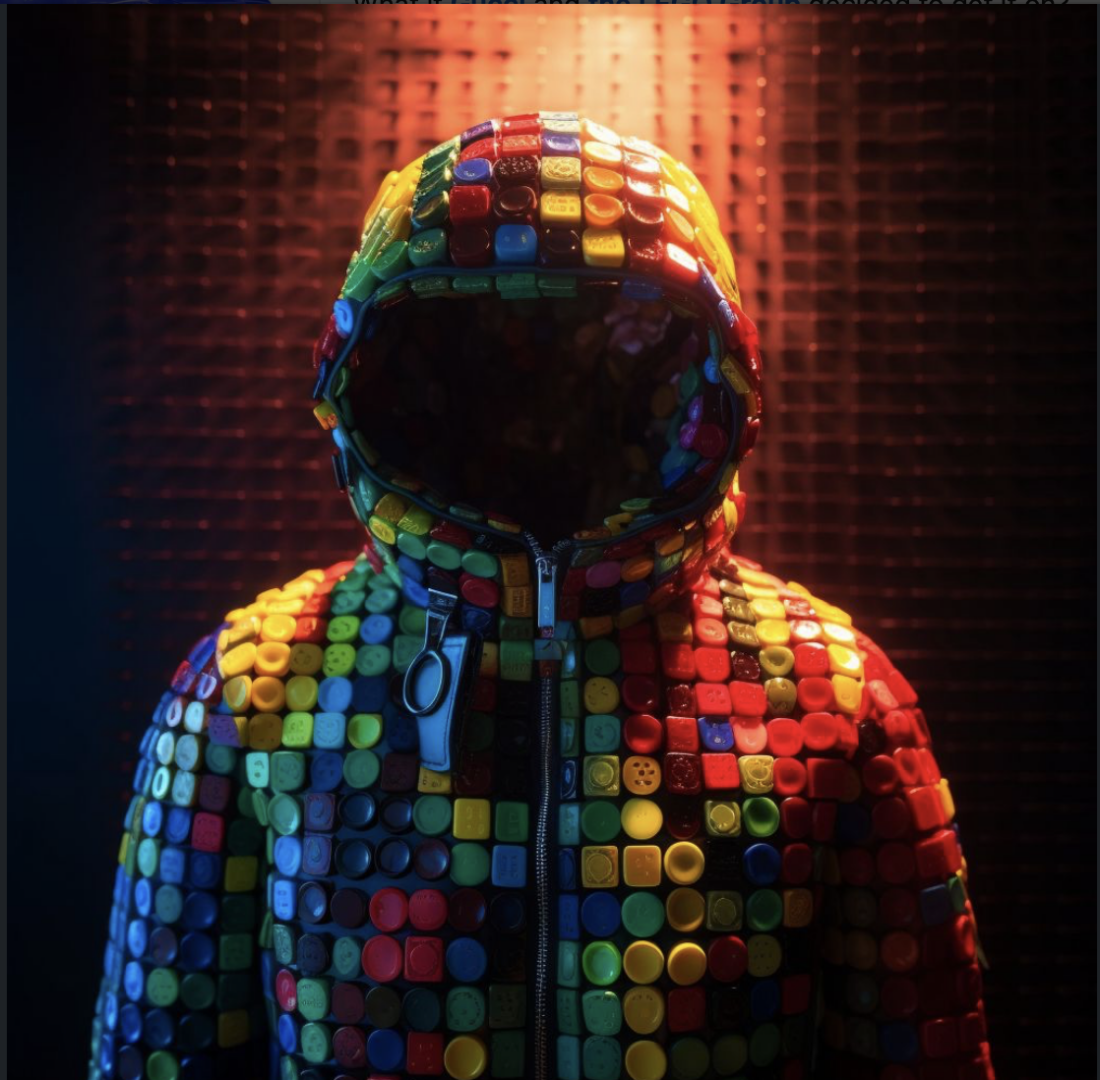

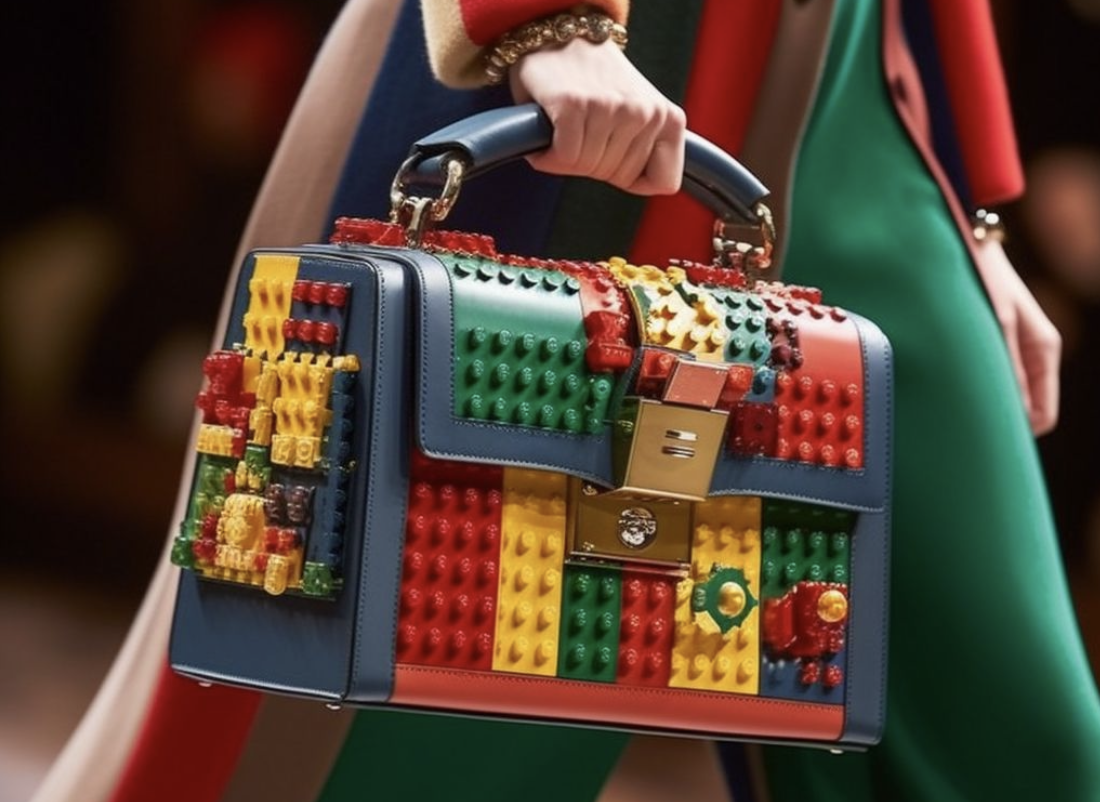
Lego X Gucci concepts
Grant Dudson, creative director at brand experience agency Chorus, has been wowing me with his regular concepts on LinkedIn for some time now, so I asked him for his perspective.
“I’m using AI to visually articulate a series of art-based ideas I’ve been exploring for some time – it’s changing the game for conceptual thinkers like me.”
How does AI allow you to reach new creative thinking?
“When brands enter into a new ideation there’s a question on everyone’s mind: will this concept hit the mark? Will the brand receive the engagement and excitement it wants with the roll out of this idea? Brands don’t know the answer to this until that idea has been piloted. But with AI, examples of what could be done for brands can be tested to check consumers’ appetite for an idea, way before it’s been trialled in real life.
I use AI in two different ways. One is for fun and involves me exploring new collaborative narratives/theming between brands (like the Lego X Gucci ideas shown above). The other is a more professional application. I have over 100 art installations I’ve sketched out across the last two years and never had the time or budget to bring them to life using a team of visual artists which I access when working on live projects. AI acts as a tool-facilitator to take my sketches and realise a version of what they could look like. The AI output is used to inform a series of production designers and visual artists to develop the vision into something practical and realistic.”
Alibaba Group is also leveraging generative AI to transform China’s creative industries. Scientists feed the algorithm hundreds of millions of images to train the models. And the images and text are converted into mathematical expressions. The algorithm then searches for patterns within the data to capture the relationship between images and words.
“Generative AI is offering infinite digital artistry possibilities for fashion and luxury brands. But brands must leverage the potential of AI and fantastic new technological capabilities while crafting strategies respecting their tradition, brand’s values and sense of exclusivity.”
Nicolas Cano, head of business development, TMALL Fashion and Luxury
BUSINESS FUTURISM: THE ABILITY TO EVOLVE AND SHAPE OUR FUTURES
AI reminds me of the wizard from The Wizard of Oz. Whilst we imagine an omnipresent, fearsome wizard controlling our world, often the reality is much less scary and filled with possibilities.
In creativity, in R&D and innovation you are usually constrained by your known realities; your budgets and your preconceived understanding at that point in time. AI has the ability to wave a magic wand, to ignore presumption and prejudice and to create a future curated from the inputs of the best minds across the globe.
At the beginning of this article, I wrote about how technology can help us to imagine new ways to flourish and thrive while cautioning that we must not make the same mistakes again when developing powerful models and platforms that will have a profound affect on our lives, for good and bad.
Stanford scientists shared recently that ChatGPT’s large language model is ‘becoming dumber‘. The nature of generative AI means that it will only be as good as the inputs we deliver as a collective and we will only see the benefits in our lives and businesses if we better understand and embrace AI.
I asked Daniel Hulme, chief AI officer at global communications and media group WPP how we can shape a better future and whether governance is needed. He told me that, “for us to create the right guardrails to protect ourselves from the impact of AI whilst enabling us to use it to flourish, it is imperative for leaders to understand the applications of AI, and their short and long-term risks.”
It is now up to us as individuals, professionals and global businesses, or foundations, to embrace AI technology to benefit us all. Let’s use AI to drive efficiencies (like at Walmart) and operations, to imagine new products and to shape and drive new ways of sustainable living, travelling and connecting in our evolving and developed smart cities. Most of the experts I spoke to about AI were keen to combine the technology with the anthropomorphic ambition to deliver creativity, transformation, positivity and meet a greater purpose for society and the planet.
Let’s work together to put that into practice.
Q: How might we make better decisions with business futurist thinking and foresight?
I’d love to hear your thoughts too!
DM me at rachel@gdruk.com