
Unpack the key trends for 2025, including Healthspan Lifestyles, Intelligent Layering and Soul Wealth. These trends will shape how companies interact with their customers over the next year and beyond across retail, food and drink, tech, wellness and luxury.
Moving into 2025, the rise of AI continues to be a key talking point across industries, and this is a theme that weaves throughout all our trends for the year. It’s proving to be a huge catalyst for change – both positive and negative – as more people and companies become aware of its usefulness in everything from personal productivity to customer service, while many remain wary of the threat of job losses, privacy issues and the environmental toll (more on this later).
As AI becomes increasingly prevalent and our digitally-oriented lifestyles show no signs of slowing down, in 2025 there will be a greater need to balance this ‘all-the-time-everywhere tech’ with more human connection and emotional intelligence. And for now at least, we are all in a position to shape the future direction of travel.
1. Healthspan Lifestyles

Lifespan is being replaced by healthspan as living a longer, healthier life becomes the ultimate status symbol.
This is about not just living longer, but staying healthy for longer and sustaining both physical and mental wellbeing – adding life to years, as the saying goes. People are drinking less, not just to protect their physical health, but to guard against cognitive decline in later life.
This will lead to an influx of longevity-boosting products and tech offerings promising to help customers live longer and stay healthy for longer.
2. Plastic People

Sustainability issues take a more personal turn as the dangers posed by microplastics become clear.
While rising levels of plastic in the ocean have had only a minimal impact on consumer habits, the direct health threat posed by increased levels of microplastics in our bodies will begin to change attitudes. Microplastics have been found in human blood, lungs and even breast milk, which all highlights the urgent need for global collaboration to reduce plastic production, improve waste management, and raise public awareness.
Brands will put their sustainability claims front and centre as a way of differentiating themselves and demonstrating how they are affecting positive change, rather than simply minimising their impact, with a shift towards products and packaging that barely leaves a trace.
3. Ultra Processed Content

Just as sugar and saturated fat-filled ultra processed foods are negatively affecting our physical health, non-stop scrolling is impacting on our mental health too.
Amid the mental health epidemic among young people, in 2025 Millennial and Gen Z parents will take steps to protect their children (the emerging Gen Alpha and Beta) from the harmful effects of social media, excessive screen time and low-quality AI-generated content. Fewer young children will have unfettered access to the internet as parents and governments become more savvy about online safety.
As well as protecting young people, there’s a growing global movement focused on reconnecting people offline.
4. Intelligent Layering
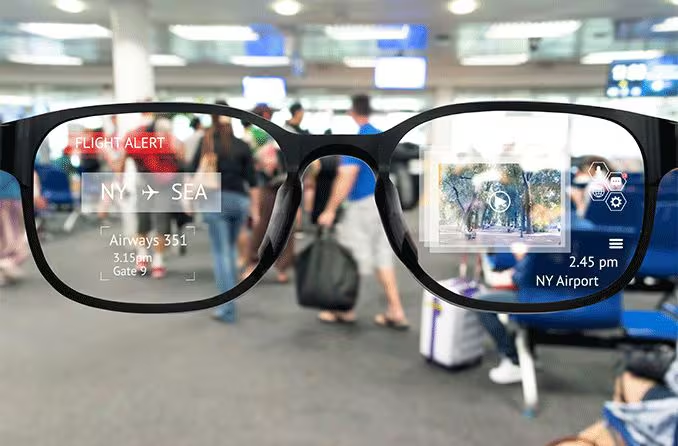
In 2025 we’ll start to see the convergence of mixed reality, spatial computing and agentic AI. This is combining computer vision with conversational search and agentic AI’s ability to take practical actions.
Agentic AI refers to an advanced artificial intelligence system that can autonomously understand complex goals, make independent decisions and take actions with minimal human supervision, adapting and learning from its experiences to solve multi-step problems efficiently.
Intelligent Layering will open up an era of ambient shopping, with mixed reality devices creating new ways for people to digitally interface with their environment.
5. Agentic Robotics
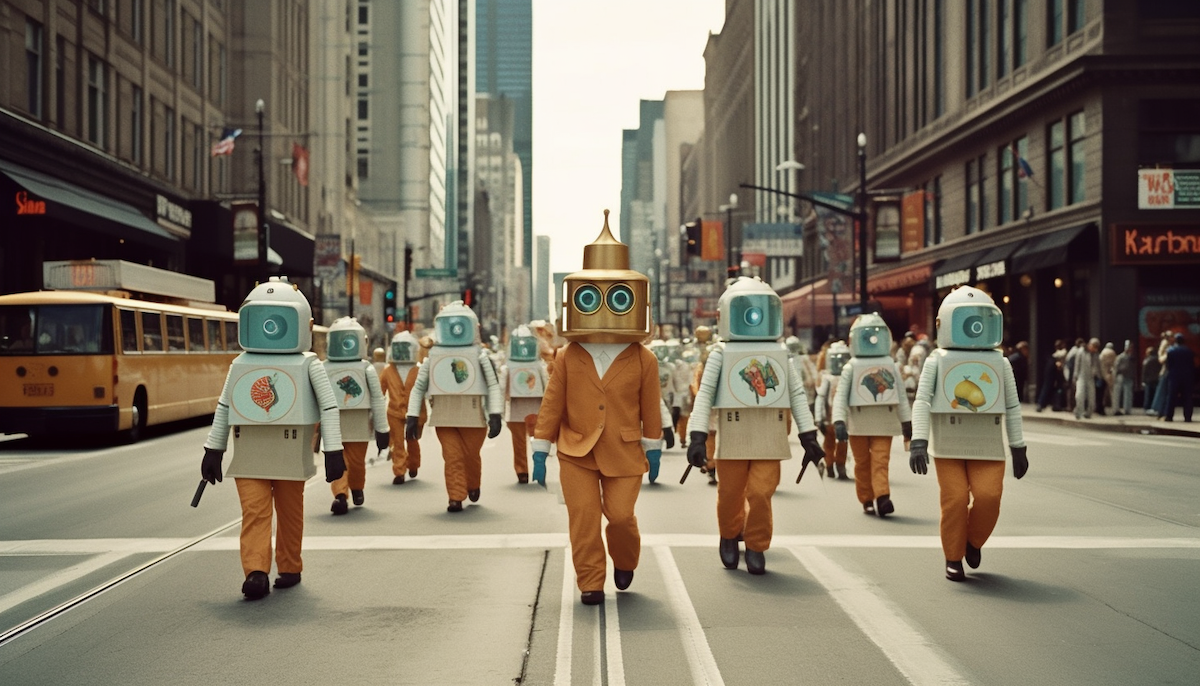
We’re now seeing the rise of robots equipped with AI capabilities that are allowing them to take on a huge range of new tasks.
Many are designed to tackle boring or otherwise undesirable tasks – see Amazon’s use of the humanoid Digit robot in its warehouses, or Somatic’s latest offering, designed to autonomously clean the toilets in office buildings. Robots also have the potential to provide much needed domestic assistance for an ageing population. This comes in the form of machines that can help with the housework and those that offer emotional support. Not just anthropomorphic workhorses, these machines are increasingly emphasising a sense of humanity and warmth.
As the robotics space continues to develop, we will see new iterations that blend better into store environments and hospitality spaces, allowing us to interact with robots on a more frequent basis.
6. AI’s Green Toll
While AI continues to transform industries, there’s a growing awareness that the vast amount of energy needed to power the tech is unsustainable.
The current wave of AI usage and development carries with it a huge environmental cost. In this age of Wi-Fi and 5G, we often think of the internet and digital technology being somehow ephemeral and disembodied, but actually all this information is processed in physical locations – vast data centres that require A LOT of electricity to run. With demand outstripping renewable energy supplies, the knock on effect here will be that coal and gas powered plants will stay online longer.
Tech companies are entering bidding wars over data centres with ready access to power, according to NextEra, while OpenAI is taking matters into its own hands, investing heavily in a nuclear start-up in order to power its operations.
7. Soul Wealth

What does all this mean for retailers, hospitality operators and brand experiences heading into the unknown in 2025? As we’ve seen, developments in AI are fuelling many of the changes that we’re seeing – both positive and negative.
But through all of this, companies will need to keep coming back to what’s really important – people. In an age of digital overload, it is people – your customers – that retailers will need to focus on, providing spaces that allow connection and community to thrive.
Soul Wealth is about bringing a new dimension to commerce – feeding the soul and enriching it with culture and experiences, rather than more stuff.
If you’d like more detail on these trends for your sector or business, or have any questions please get in touch.